We landed in Barcelona late on a Friday afternoon, dropped our bags, and went looking for a bar. Not a particular one — just the nearest approximation of a dive, which is how we ended up at Lennox, an Irish pub a few blocks from the hotel. We’ve found this to be close to universal when traveling: there’s an Irish pub within walking distance of almost anywhere on earth, and it’s close enough to the same bar every time that it works as a kind of decompression chamber after a travel day. Have a pint somewhere that could be anywhere, then go meet the place you’re actually in.
Kayla and I spent the next fifteen days doing a loop through the north of the country — Barcelona to Bilbao to San Sebastián, into Rioja wine country, down to the Galician coast, out to Santiago de Compostela, then back to Barcelona to close the circle before flying home. Mostly I just wanted to get it down while it’s still fresh: the good meals, the one or two disappointments, and the handful of things that caught me off guard.
Barcelona
We got pulled into an El Caganer shop before we’d been in the city twenty minutes — an entire storefront dedicated to the little figurine, squatting, mid-business, that Catalan families apparently tuck into their nativity scenes. A card on the wall did its best to explain the tradition. We left mildly delighted.
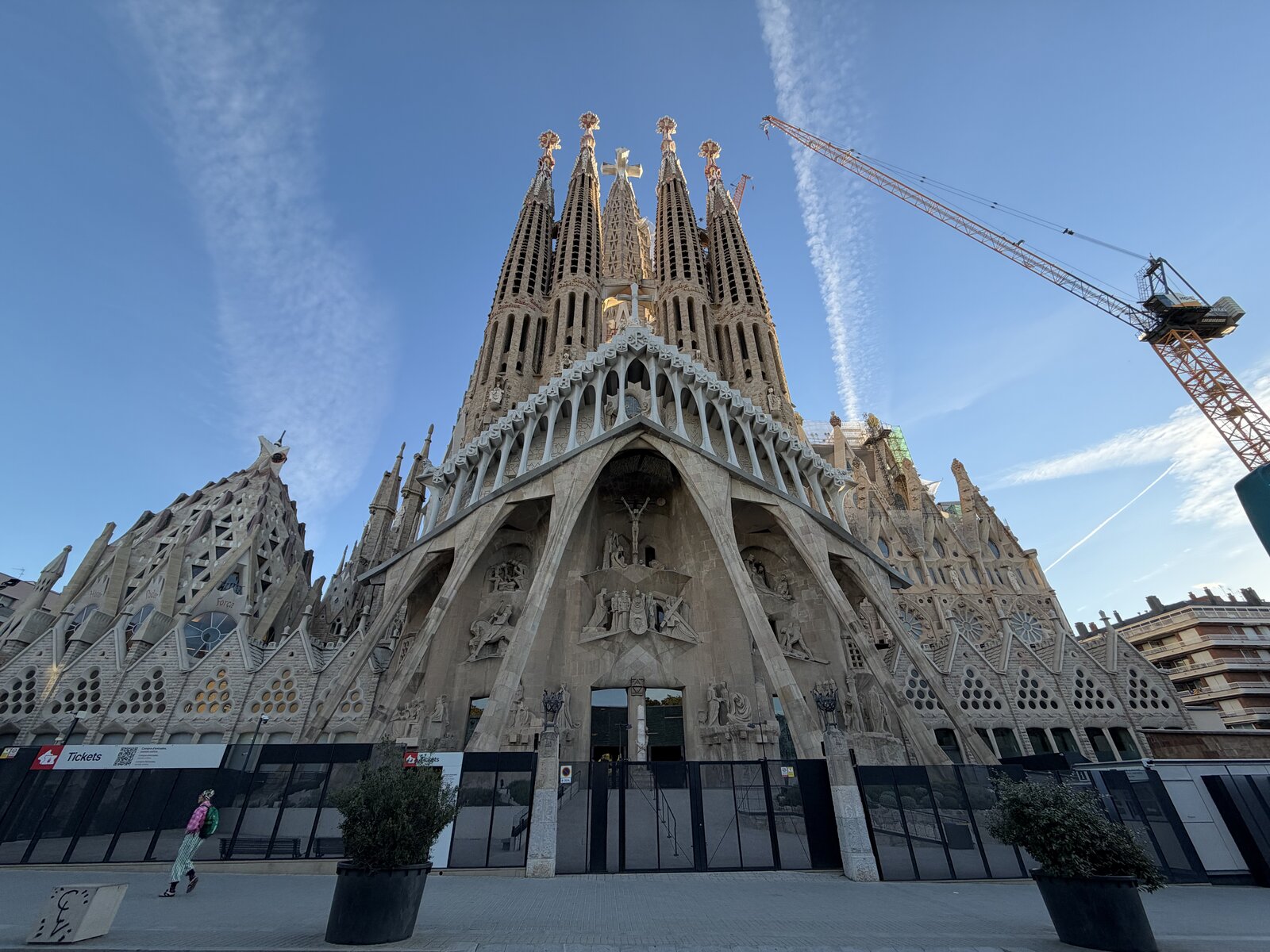
The next morning was the Sagrada Família — the basilica and then the towers, climbing up into the stonework itself.
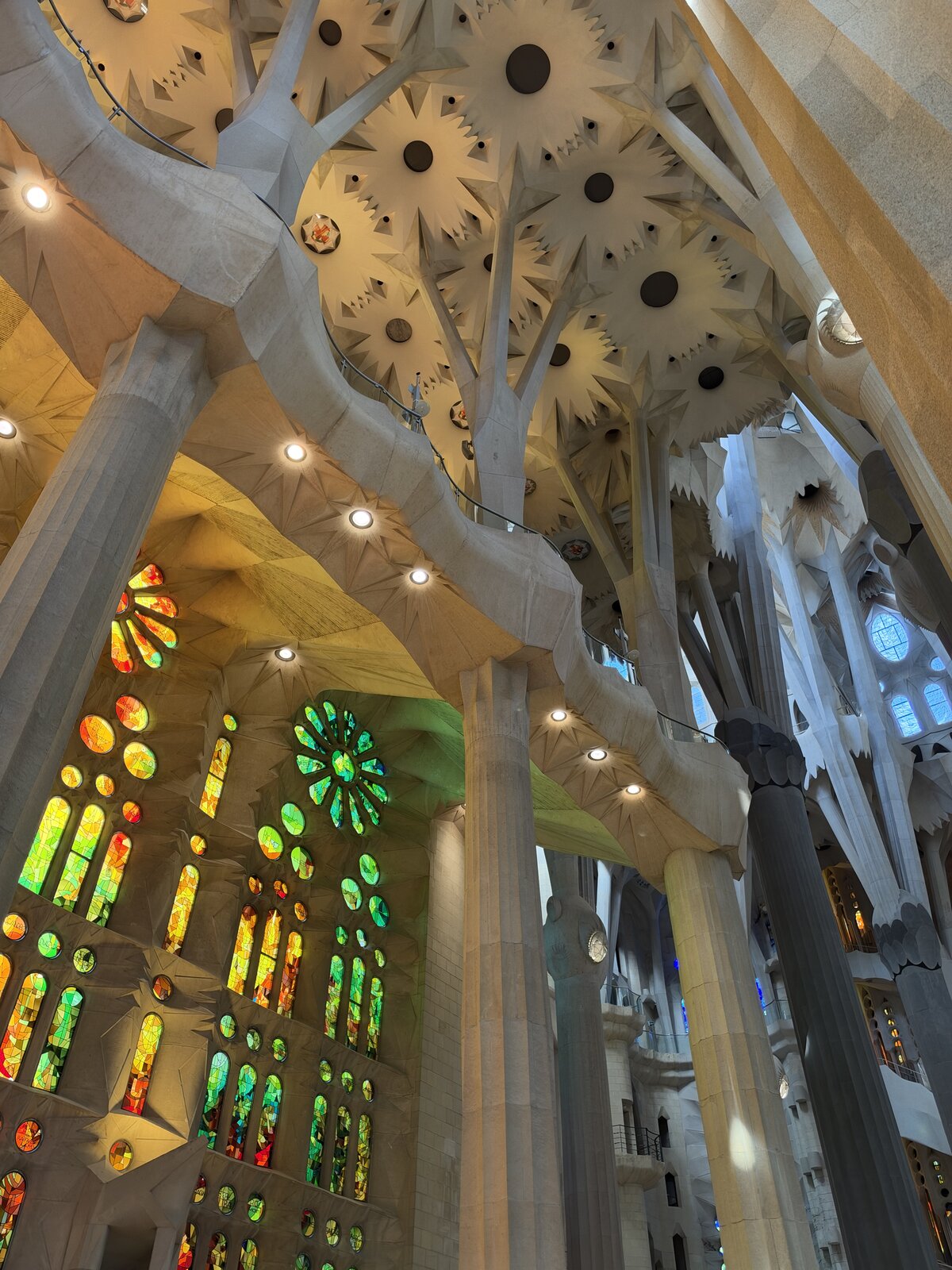
The stained glass is what stuck with me — cool blues and greens on one side, warm reds and golds on the other, each pouring its own color across the floor depending on where you stand. The split follows Gaudí’s original plan for the two facades — warm toward the Nativity side, cooler and starker toward the Passion side — though the glass itself wasn’t actually made until decades after he died, designed by an artist named Joan Vila-Grau starting in the late 1990s. What I didn’t expect was a placard inside, part of the museum exhibit on the building’s ongoing construction, describing one of the still-unfinished towers: this type of cross will crown the tower devoted to Jesus Christ. Future tense. That tower has been finished since earlier this year — though, going by the crane still parked next to it, apparently not everything else. The church has been under construction since 1882, and the museum about it is already behind.
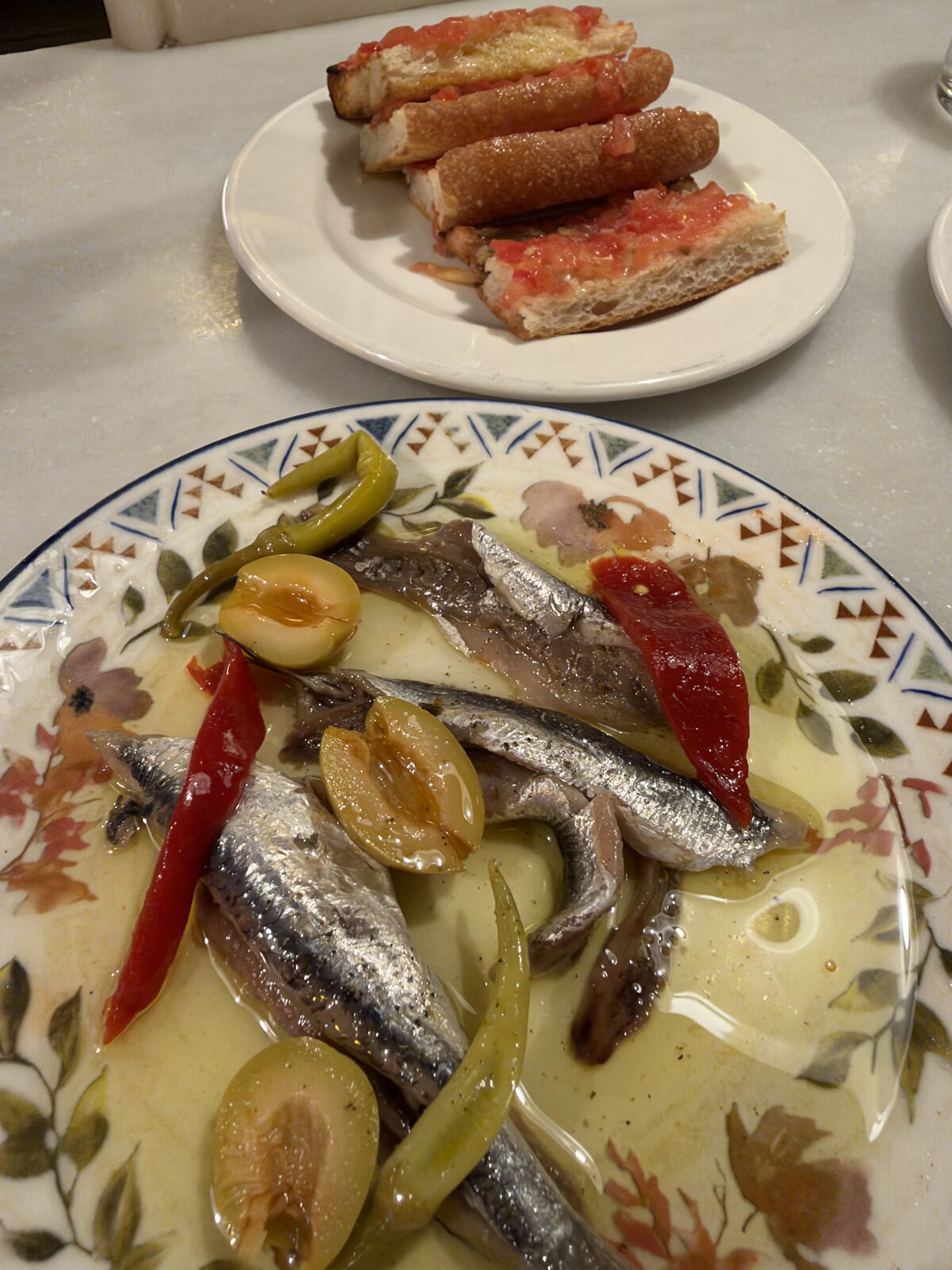
We spent the rest of the day wandering the old town and landed at Bar Del Pla for lunch — anchovies on pan con tomate, which would turn out to be the first of a great many anchovies on this trip, and which we liked enough to come back for on our last day in the country.
Bilbao
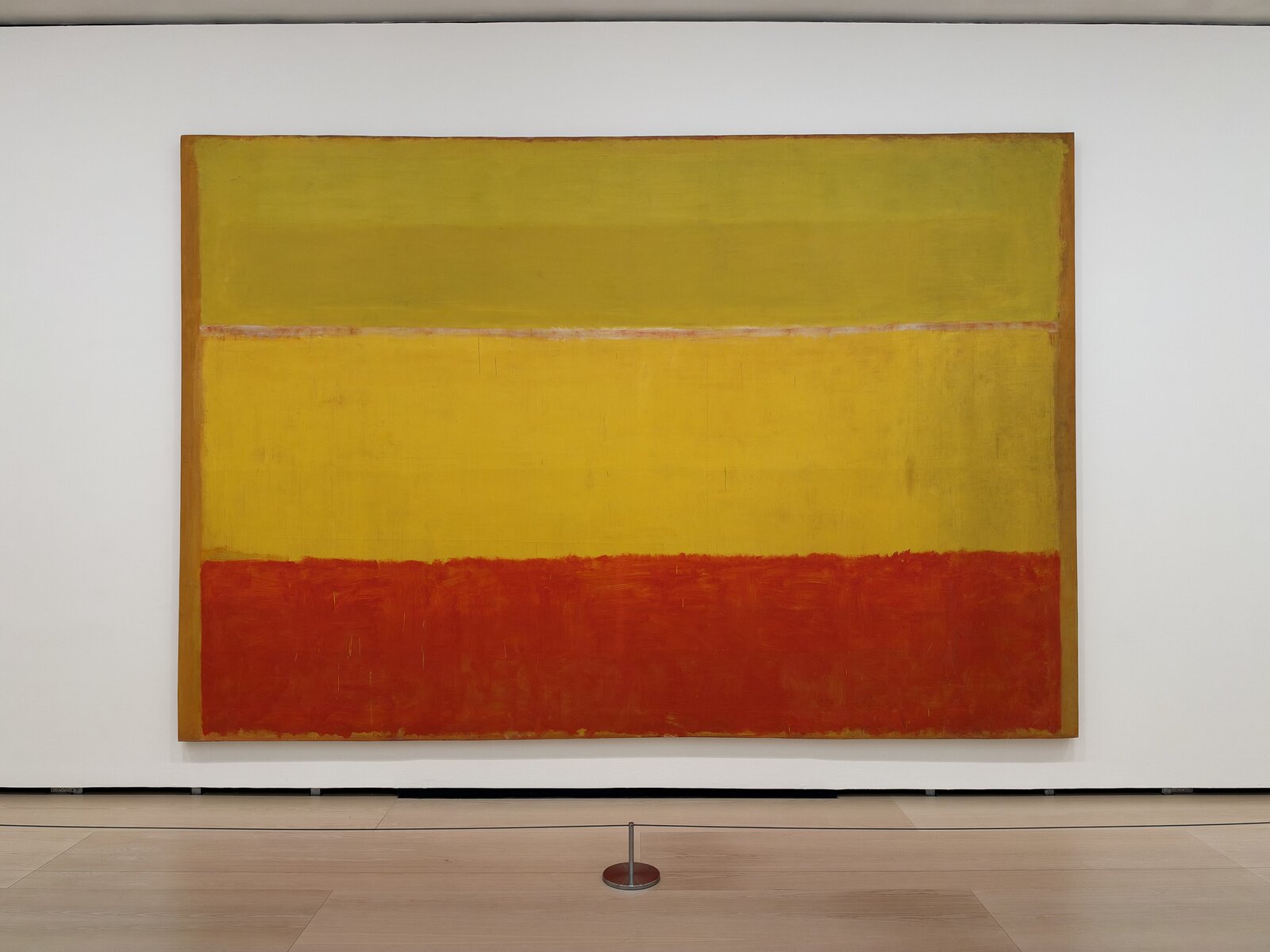
A short flight put us in Bilbao by early afternoon — more anchovies at lunch, plus txistorra, a thin Basque sausage seasoned with garlic and paprika, coiled into a spiral and grilled until crisp. Then the Guggenheim — the building itself is the real event, titanium curves by Frank Gehry that still don’t look like anything else more than two decades on, better experienced in person than any photo manages. The art inside I’ll be a little more mixed about. Inside, a huge Rothko and a Basquiat were genuinely worth the visit, but the thing that actually swallowed me whole was Richard Serra’s The Matter of Time — a permanent installation of torqued steel ellipses, 1,200 tons of Cor-Ten steel strung across more than a hundred meters, that you walk through rather than look at. It’s disorienting in the best way, working on you physically before you’ve decided what you think of it. A room of Jasper Johns, by contrast, was thoughtfully put together but didn’t move me the same way, and standing there I think I figured out why. Johns was rebelling against exactly the kind of art that does move me — the emotional, gestural stuff, a Rothko inviting you to just feel something — in favor of flat, already-familiar symbols: flags, targets, numbers. A flag is already a two-dimensional object, so a painting of one raises an honest question — is this a picture of a flag, or is it just a flag? — and the whole point is to get you thinking about the object and the surface instead of feeling anything. Clever. Just not, it turns out, for me.
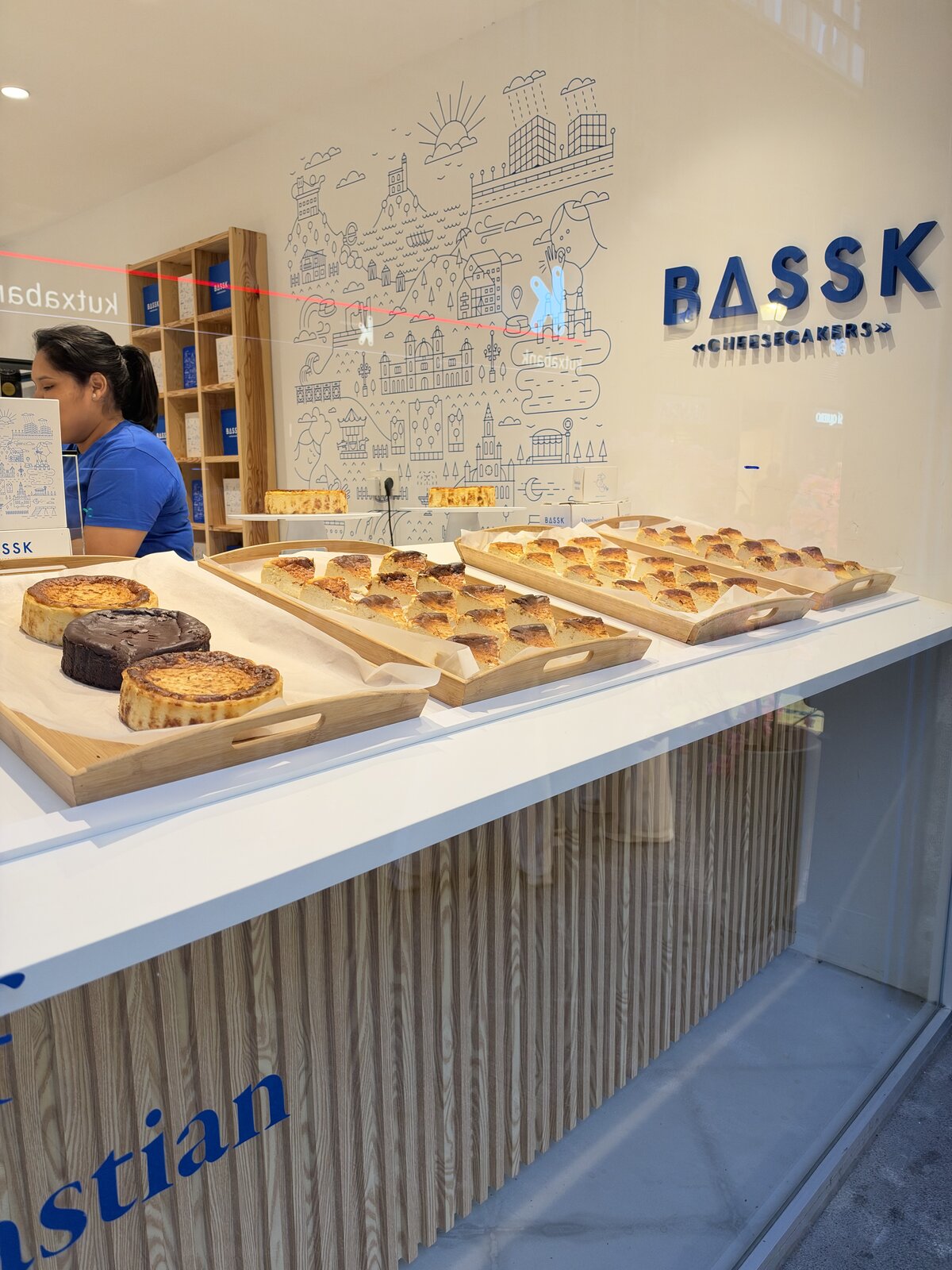
We redeemed the afternoon with Basque cheesecake — the first of several — and our introduction to pintxos culture: zuritos, the small glasses of beer meant for pacing yourself across a bar crawl, and txakoli, poured from well above the glass to rough it up and let it breathe. Then a rental car pickup at the airport, and we were off toward the coast.
San Sebastián
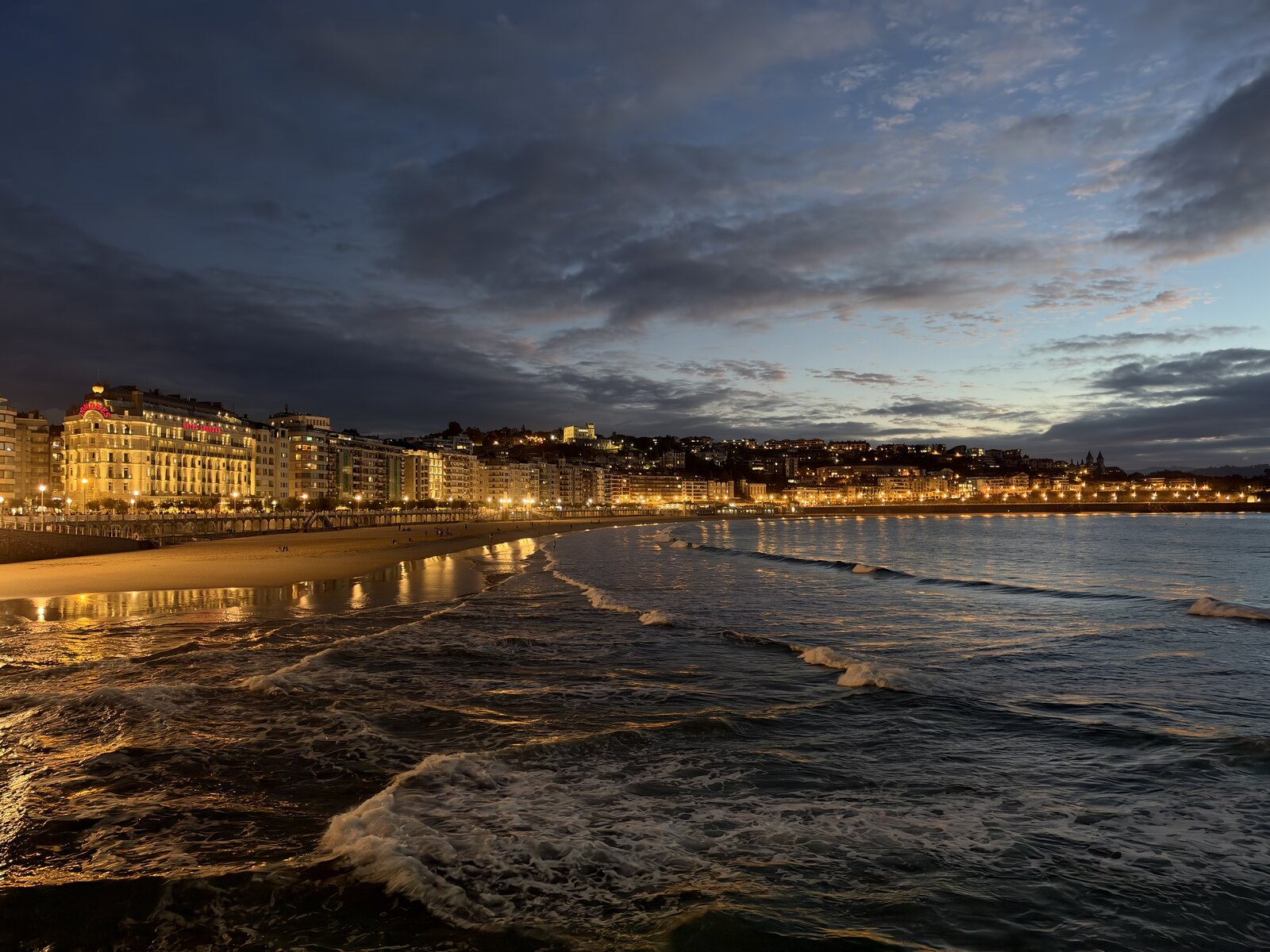
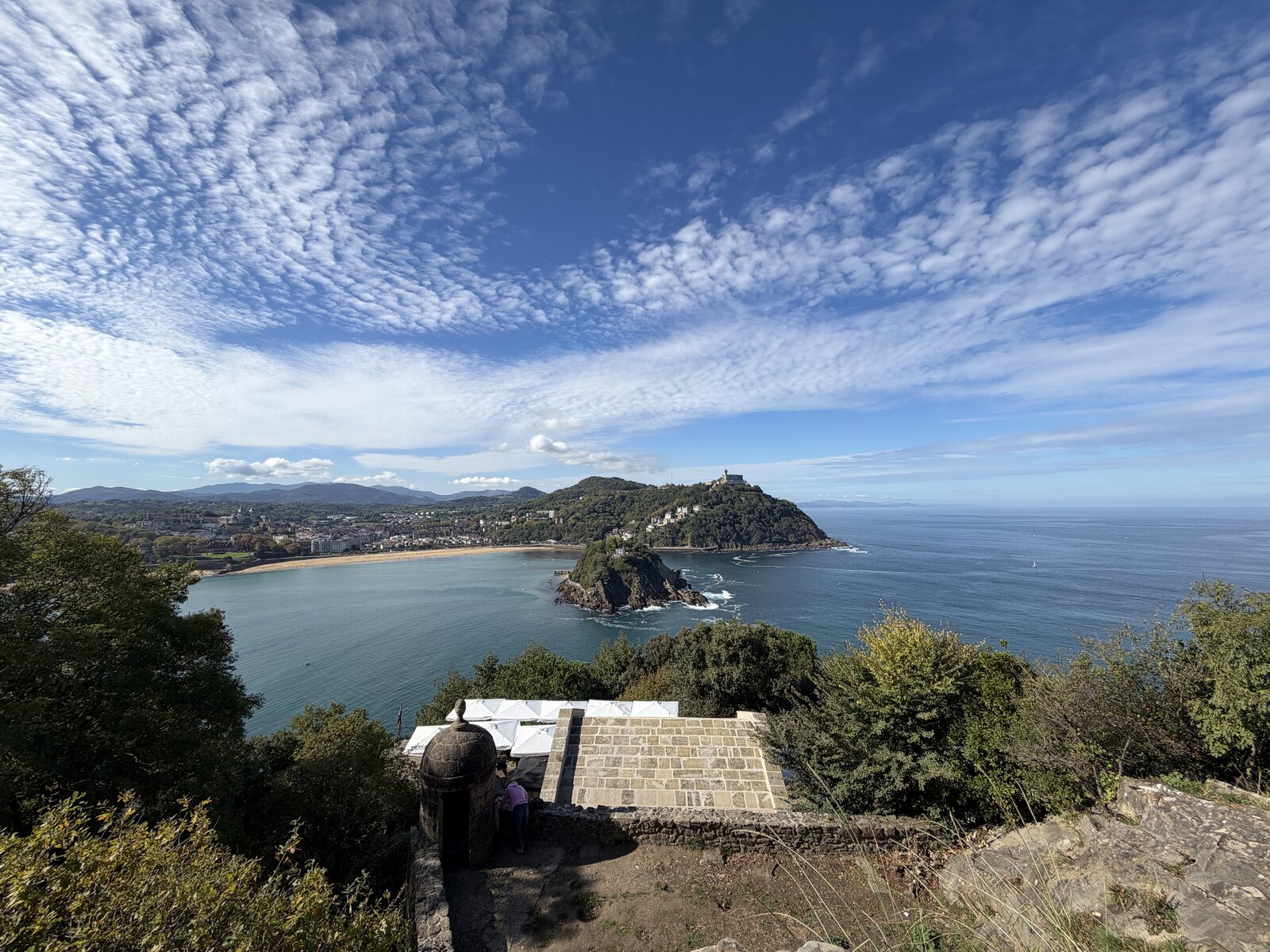
San Sebastián is the kind of place where I understood the appeal within about ten minutes of arriving. The view earns every bit of its reputation — the curve of La Concha beach wrapping the bay, built up the hillsides on either side. I climbed Monte Urgull and got the Bay of Biscay from above in exchange for the walk. At night the whole beach lights up, and it’s a different kind of impressive — quieter, more theatrical.
The old town is built for wandering — Constitution Square, a string of churches, and more pintxos bars per block than seems architecturally reasonable. Drip coffee is something I actually like and almost never find in Europe — I usually settle for an americano as the closest approximation — so I went hunting for it here anyway. What I didn’t have to hunt for was a good cortado: every single place we tried one made it well, which isn’t something I can say for coffee shops back home.
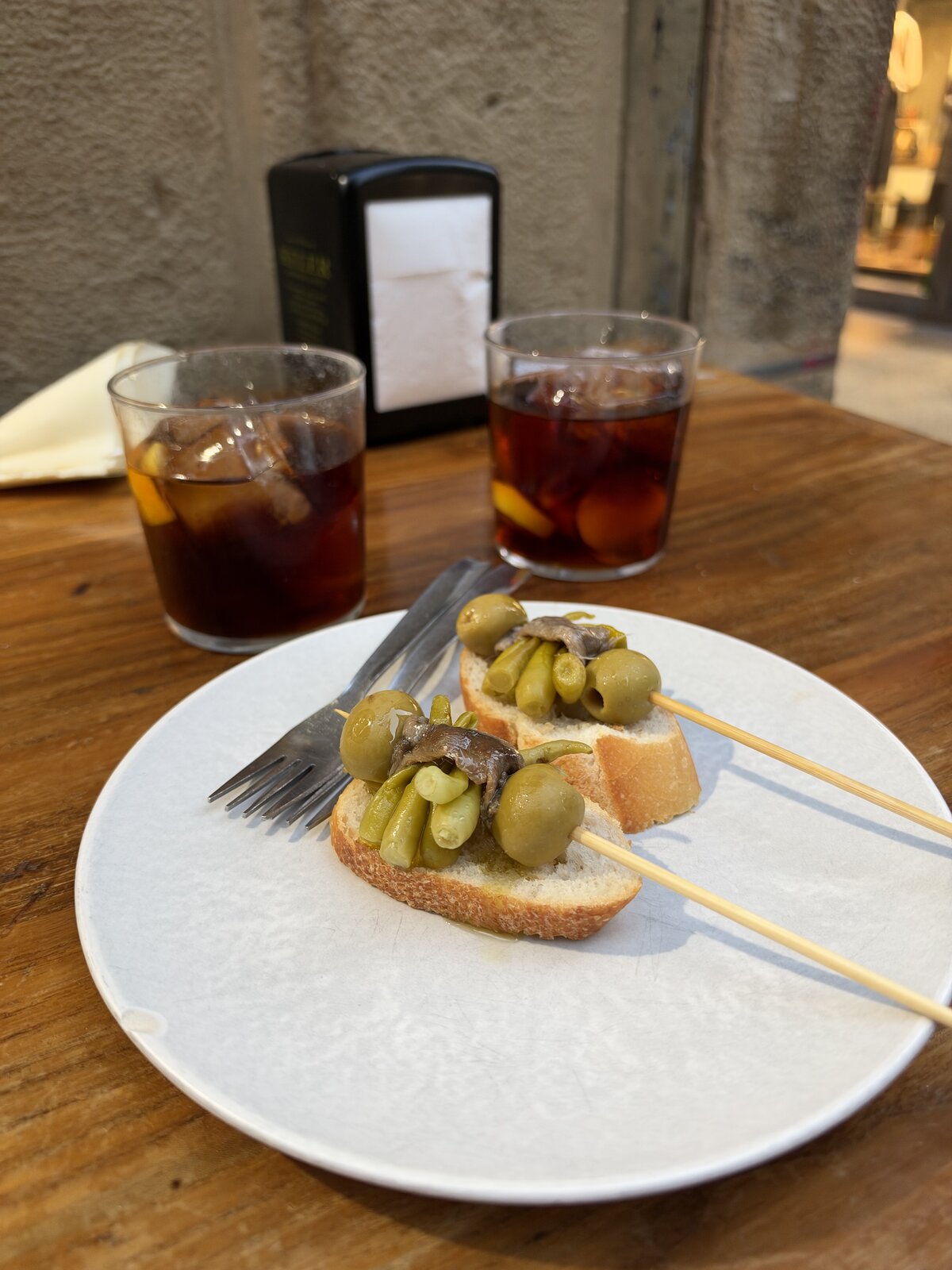
Borda Berri gave us some of the best cooked pintxos of the trip; a gilda — the olive-anchovy-pepper skewer — made its first appearance of many, usually alongside a glass of vermut poured over ice.
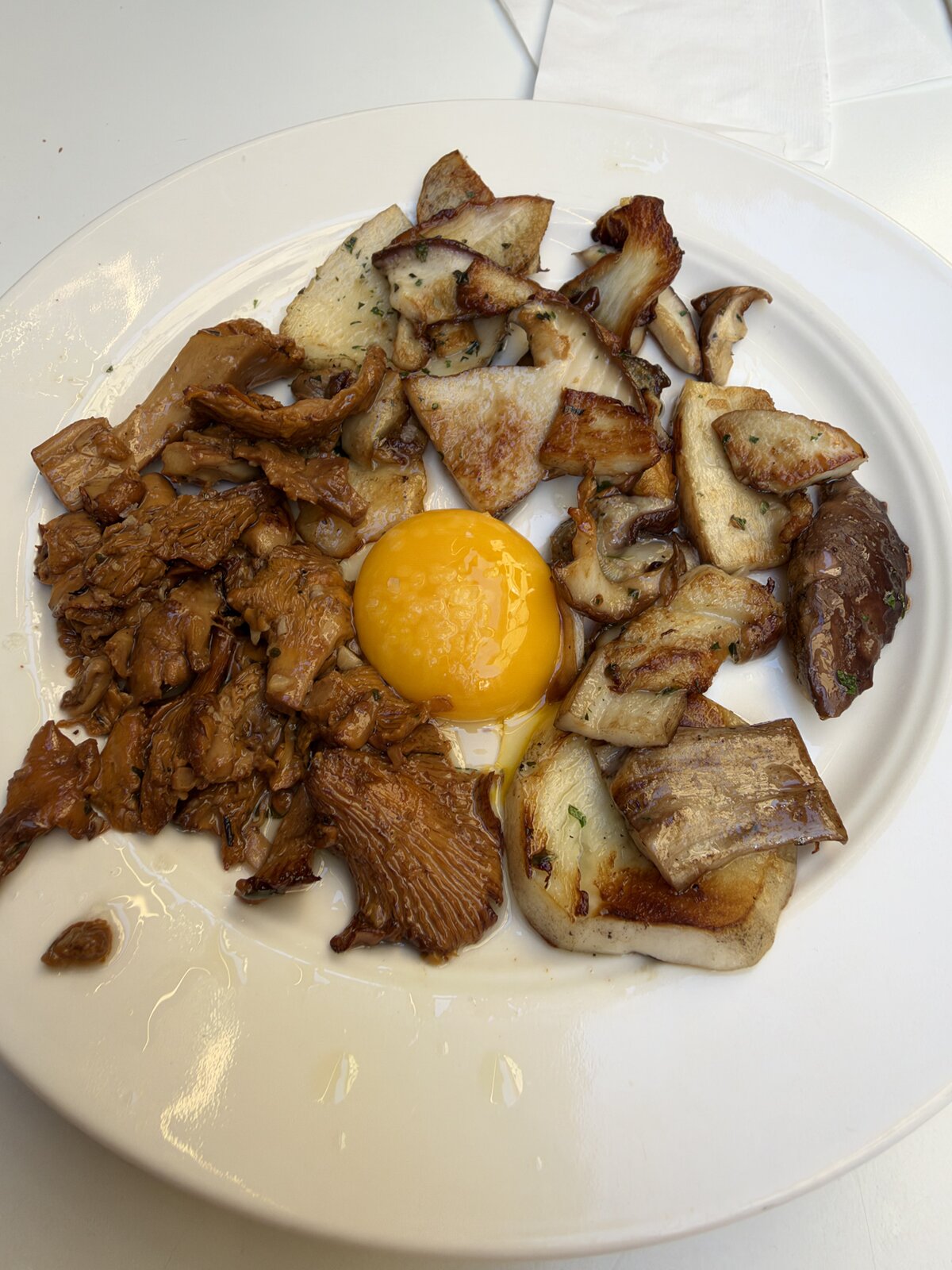
But the standout came at Ganbara, after an hour-plus wait in line (Kayla ducked out to a museum while I held our spot) — the kind of line that exists partly because Anthony Bourdain used to come back to this exact bar for this exact dish. “My favorite place,” he said on camera once. “I come here every time like a heat-seeking missile.” The hongos a la plancha — grilled wild mushrooms, technically not a pintxo at all but a full plate, topped with a raw egg yolk you break and stir through while it’s still hot — was one of the best things we ate in Spain, full stop. Grilled foie gras on toast, right alongside it, wasn’t far behind.
A day trip to Getaria started at the Cristóbal Balenciaga Museum — he was born in the town in 1895, and the museum, the first in the world built around a single couturier, was very much Kayla’s stop, fashion being a real thing for her. Lunch after, at Kaia Kaipe, gave us turbot that was good — solid, well cooked, a genuinely nice meal. More Basque cheesecake, this round from La Viña, more pintxos, and a last trip back to a dive bar called The Hole rounded out the stay.
Laguardia and the Rioja wine country
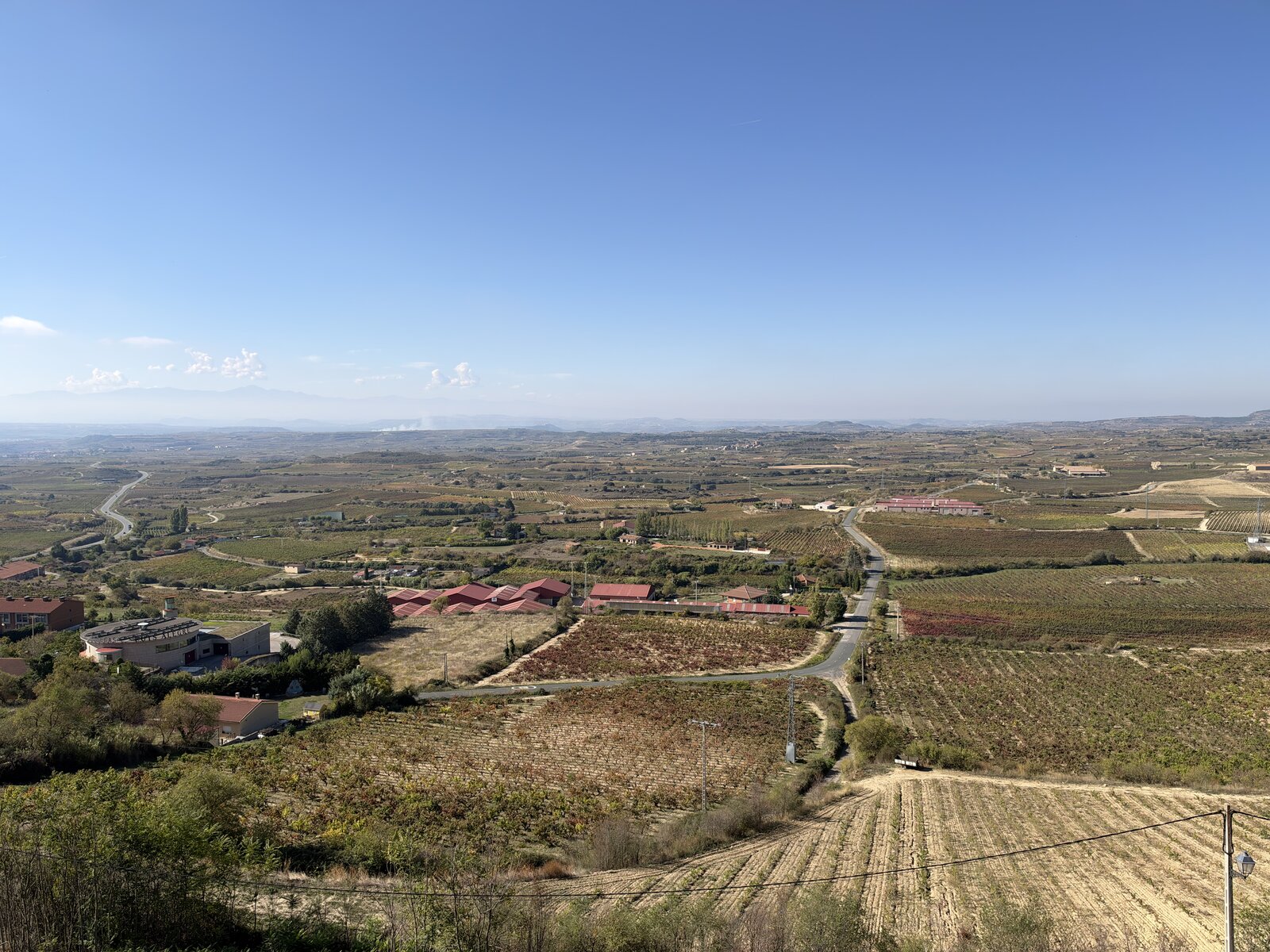
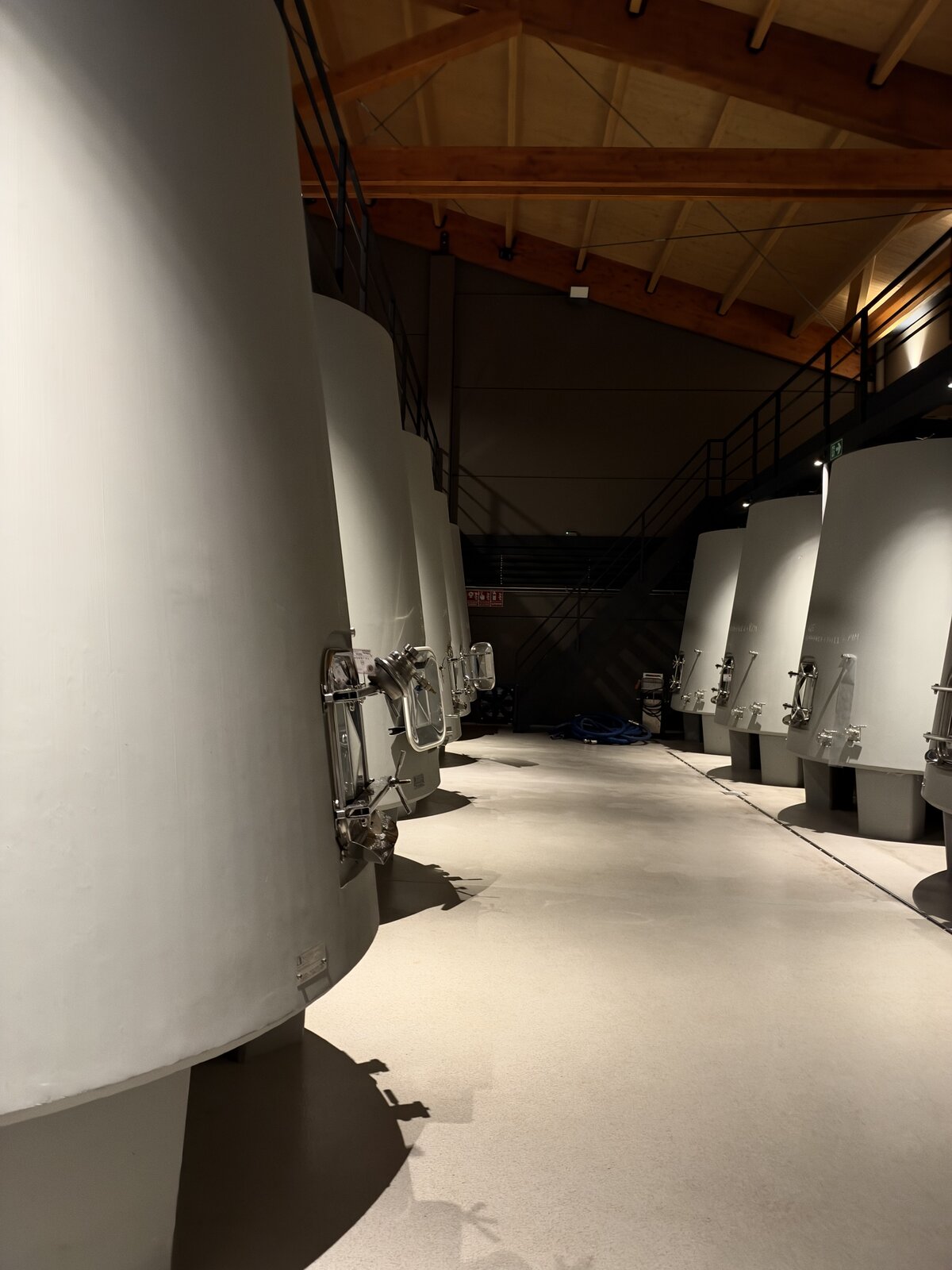
The drive south into Rioja Alavesa delivers you into a valley that looks, improbably, like Tuscany — terraced vineyards running up toward a walled medieval town on a hill. Laguardia itself is small, maybe fifteen hundred people, with a guard tower and a network of ancient tunnels carved beneath the town, which we toured along with a tasting straight from the enormous concrete tanks built into the rock. The town’s one real church, Santa María de los Reyes, has a portico worth the whole stop on its own: a 14th-century Gothic stone portal carved with the Twelve Apostles and scenes from the life of the Virgin, still wearing its original paint. Portals like it were common once; almost none survive with their color intact, since most sat exposed to the weather for centuries. This one got walled up and forgotten sometime in the 16th century, which is apparently the only reason the paint is still there at all — and now it’s lit figure by figure, one at a time, while a recorded tour plays over it. Ours was in Spanish only, so I followed almost none of the explanation and all of the effect.
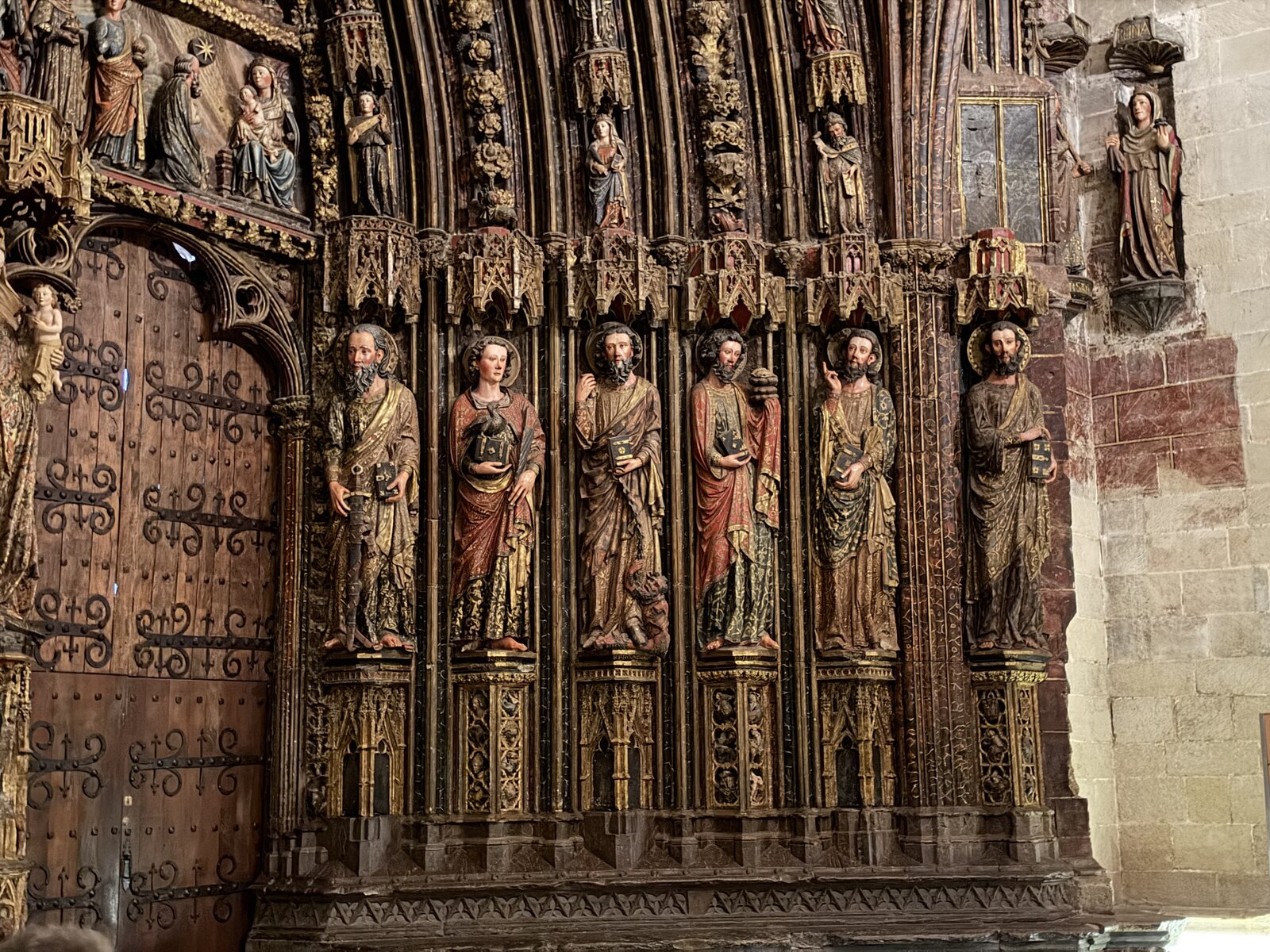
One of the more quietly rewarding stretches of the whole trip, though, happened in a tiny local museum, in a room full of old hand-powered machinery — a crank-driven washing machine, a hand vacuum, a record player, a shelf of old radios, a wind-up gramophone still carrying a record on the turntable. The owner, who as far as I could tell spoke no English, walked us through the room piece by piece: demonstrate, wait for our reaction, move to the next thing. We understood maybe one word in twenty. None of that mattered. His enthusiasm for these objects came through completely on its own, and it’s stuck with me since — the way some things don’t actually need a shared language, just two people willing to pay attention to each other.
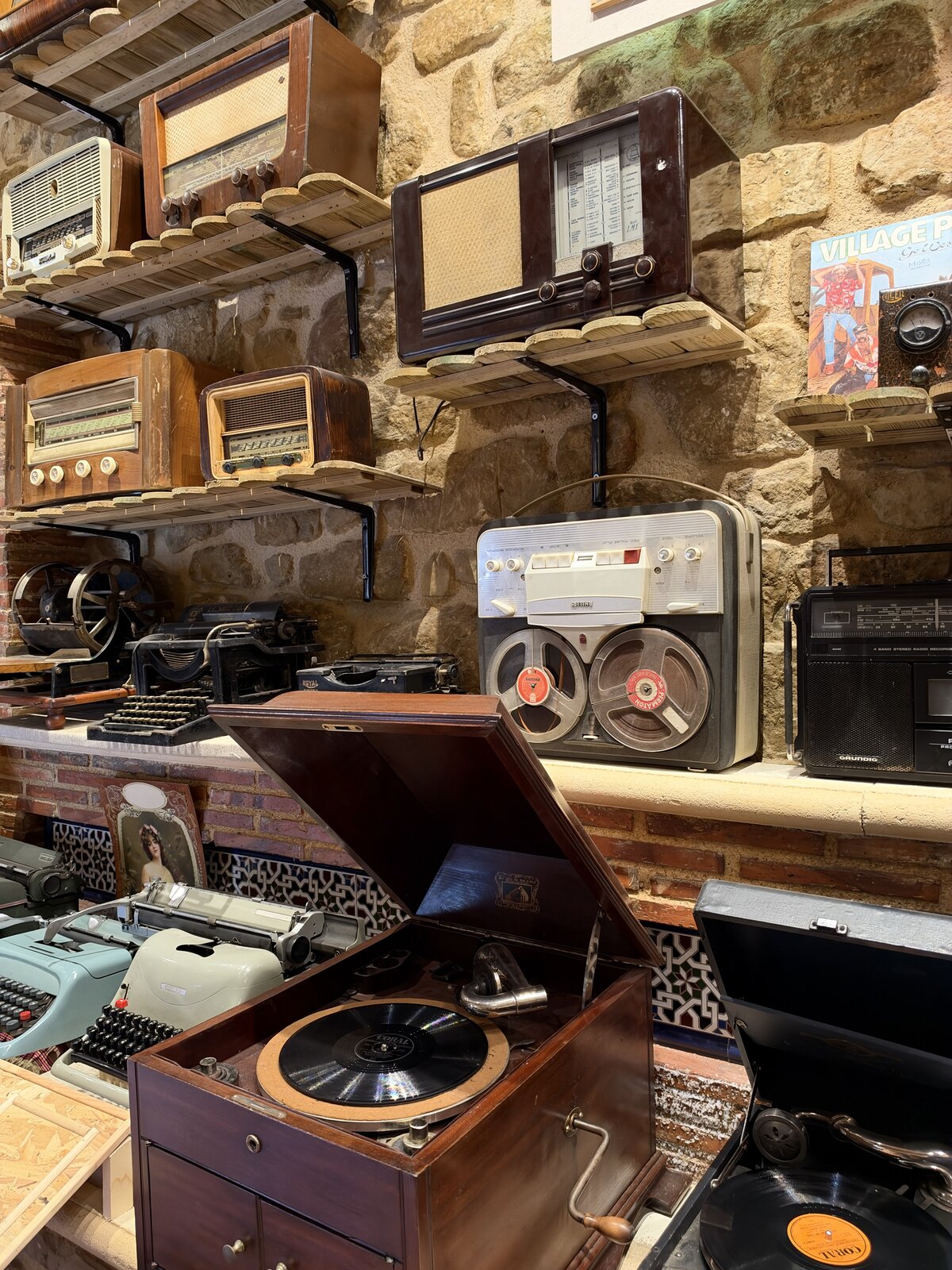
We did three winery visits from our base in Laguardia. Carlos San Pedro gave us a private tour and a tasting from the tanks. Gómez Cruzado, up in Haro, was the best of the three — a great tour, great wine (we brought several bottles home), and good company: a couple who’d moved from the US to Nice, another visiting from Florida, all of us trading notes over glasses. Haro itself we only passed through briefly, too early in the day for lunch. Marqués de Riscal in Elciego closed out the circuit — the wine was good enough that we bought two bottles on the spot. There’s a quiet bit of history behind the winery, too: Rioja’s rules generally allow only a handful of native grapes, but Riscal has a grandfathered exception to grow Cabernet Sauvignon, dating back to 1858, when the founding Marqués shipped vines over from Bordeaux to experiment in a region that was otherwise all Tempranillo and Graciano. It still goes into their top wine today. The estate’s hotel, all titanium ribbons tinged pink and gold for the winery’s reds and whites, is one of only a few things Frank Gehry ever built in Spain — along with the Guggenheim, and, it turns out, a giant steel fish sculpture back in Barcelona’s Port Olímpic, the city this whole trip started and ended in. We met a Dutch couple there who’d driven down just for the weekend, which struck me as the correct way to live.
In between: cortado and tomato toast most mornings, our first spanish tortilla of the trip (hard to believe it took us this long), a stop at Bar Velar, and one memorable evening at a bar where my nieces called and I got to watch them rollerskate over FaceTime. Even a town this size had a dive bar worth finding.
Cambados and the Rías Baixas
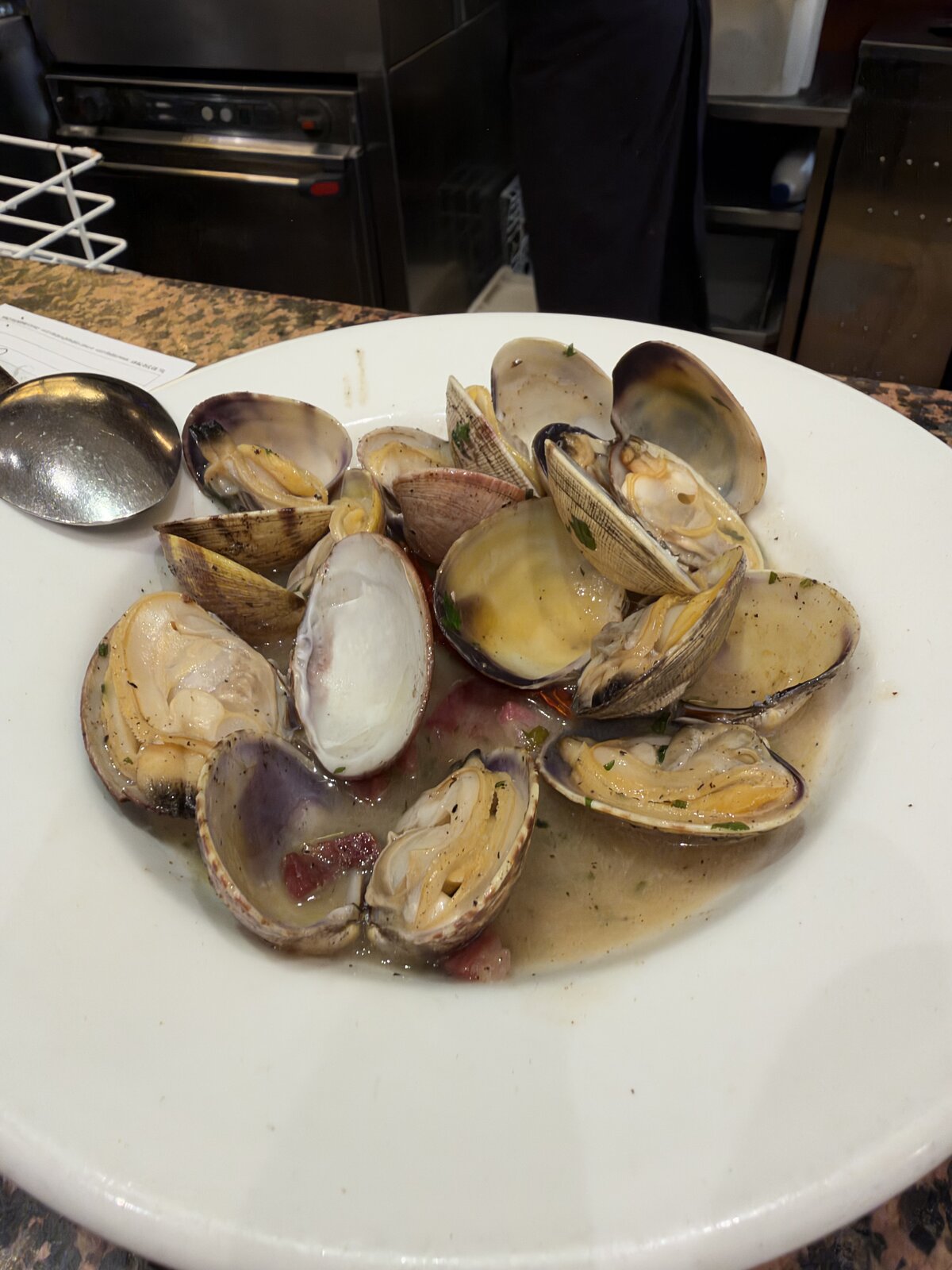
The drive from Laguardia to Cambados is a long one, and we arrived to a palace and a church, the latter closed for the evening. Pintxos, a cortado, and a plate of razor clams — a Galician specialty we hadn’t had anywhere else on the trip — got us through until morning.
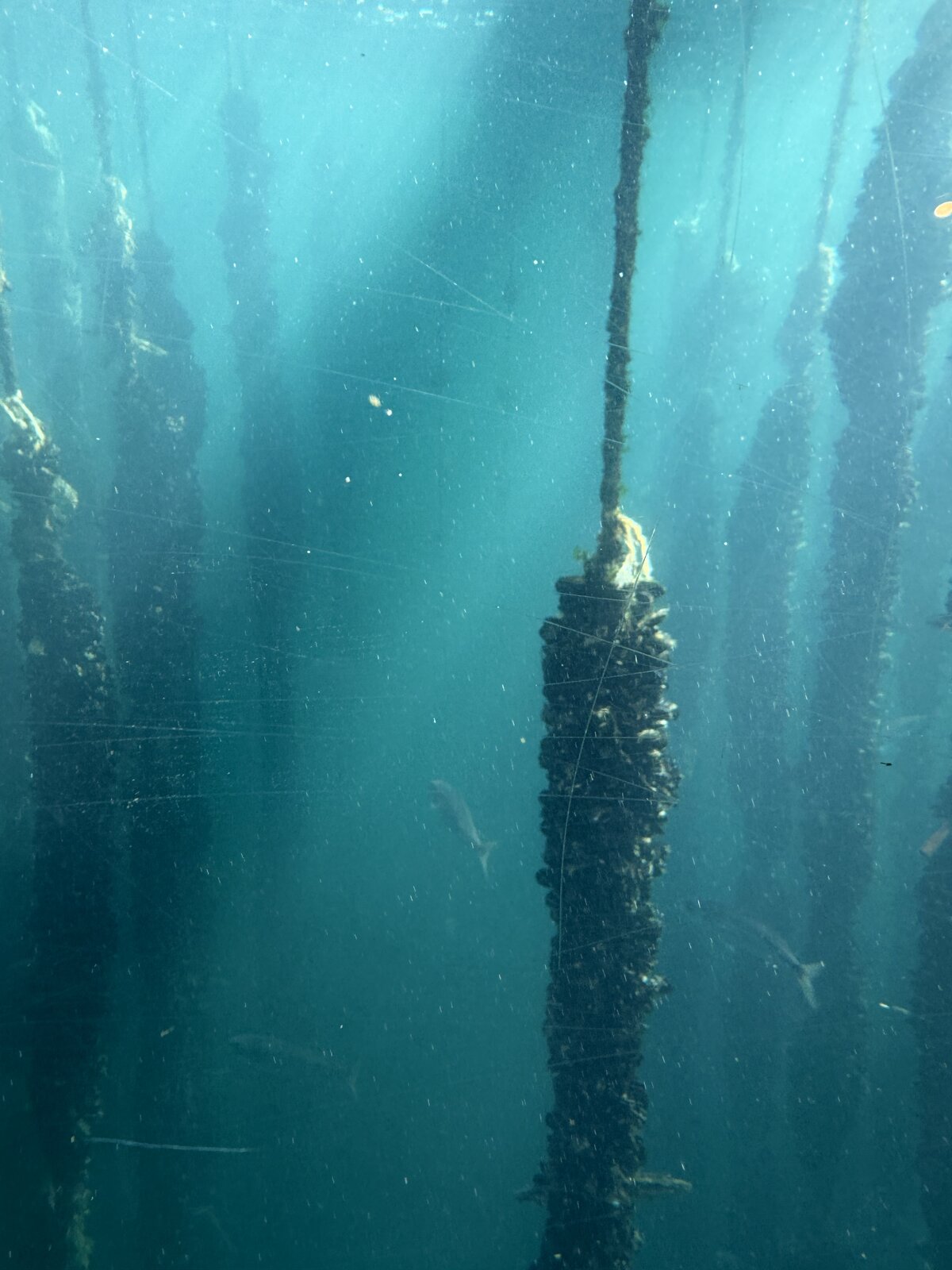
The mussel boat out of O Grove was the single best thing we did on this trip. Four deep rectangular trays of mussels and two bottles of albariño, while the boat worked its way along the Arousa estuary past the floating rafts where the mussels actually grow, suspended on ropes down into the water. Windows in the hull let you look straight down and watch the ropes drift by beneath you, draped in shellfish. It’s hard to overstate how well the whole thing works as an afternoon.
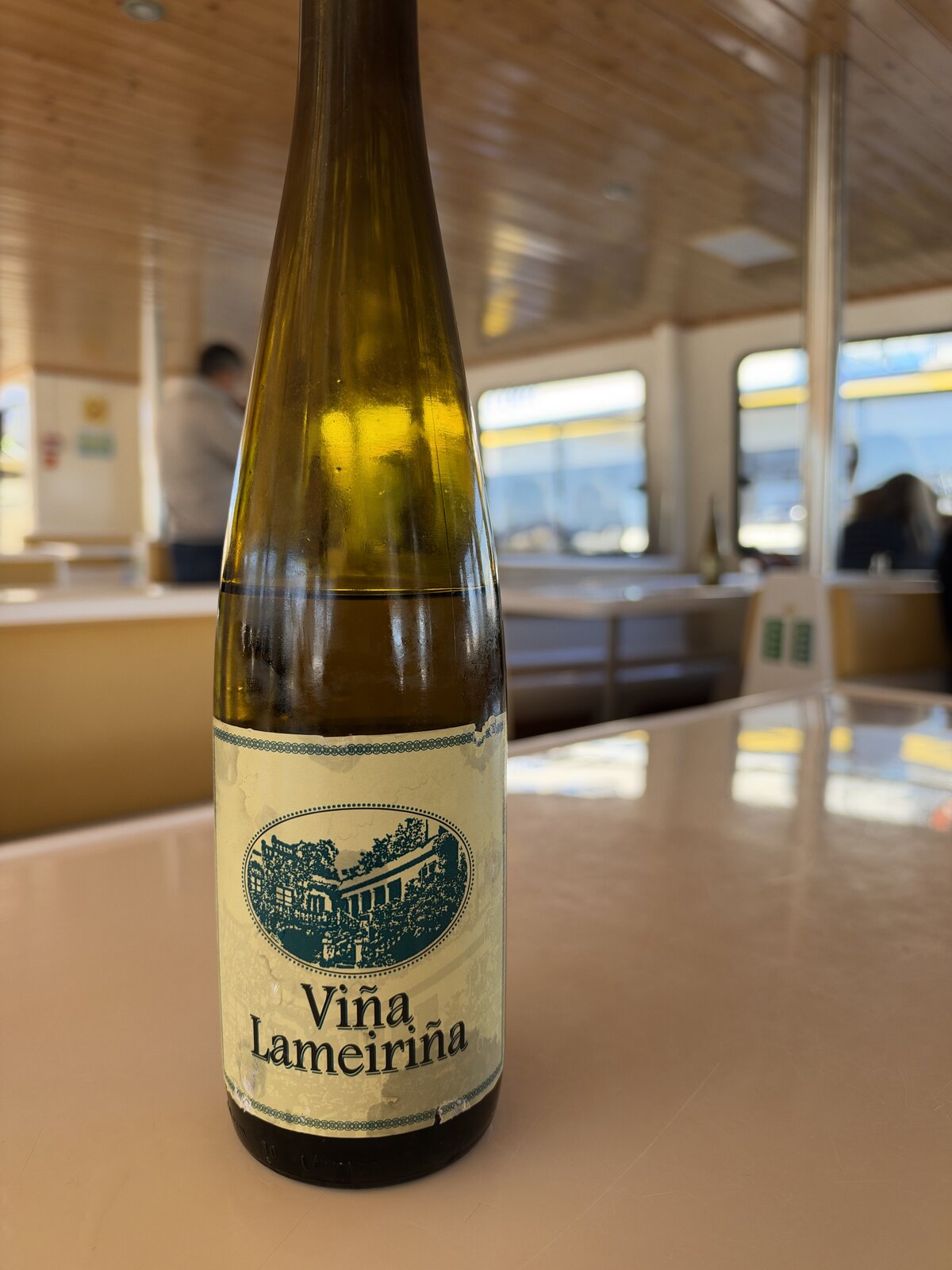
We went back to the church once it was finally open and just sat for a while. I lit a candle. I’m an atheist, for what it’s worth, but an old church that’s been cared for that long earns a few quiet minutes regardless of what you believe. Dinner that night was at Taberna do Trasno, a Michelin Bib Gourmand place that lived up to the designation, and the next morning we toured the palace grounds and gardens before the drive to Santiago.
Santiago de Compostela
The drive into Santiago runs past pilgrims on foot, packs on their backs, closing out however many hundred kilometers of the Camino they’d set out to walk. The cathedral itself is striking even from the outside, the kind of building that makes you stop walking without quite deciding to.
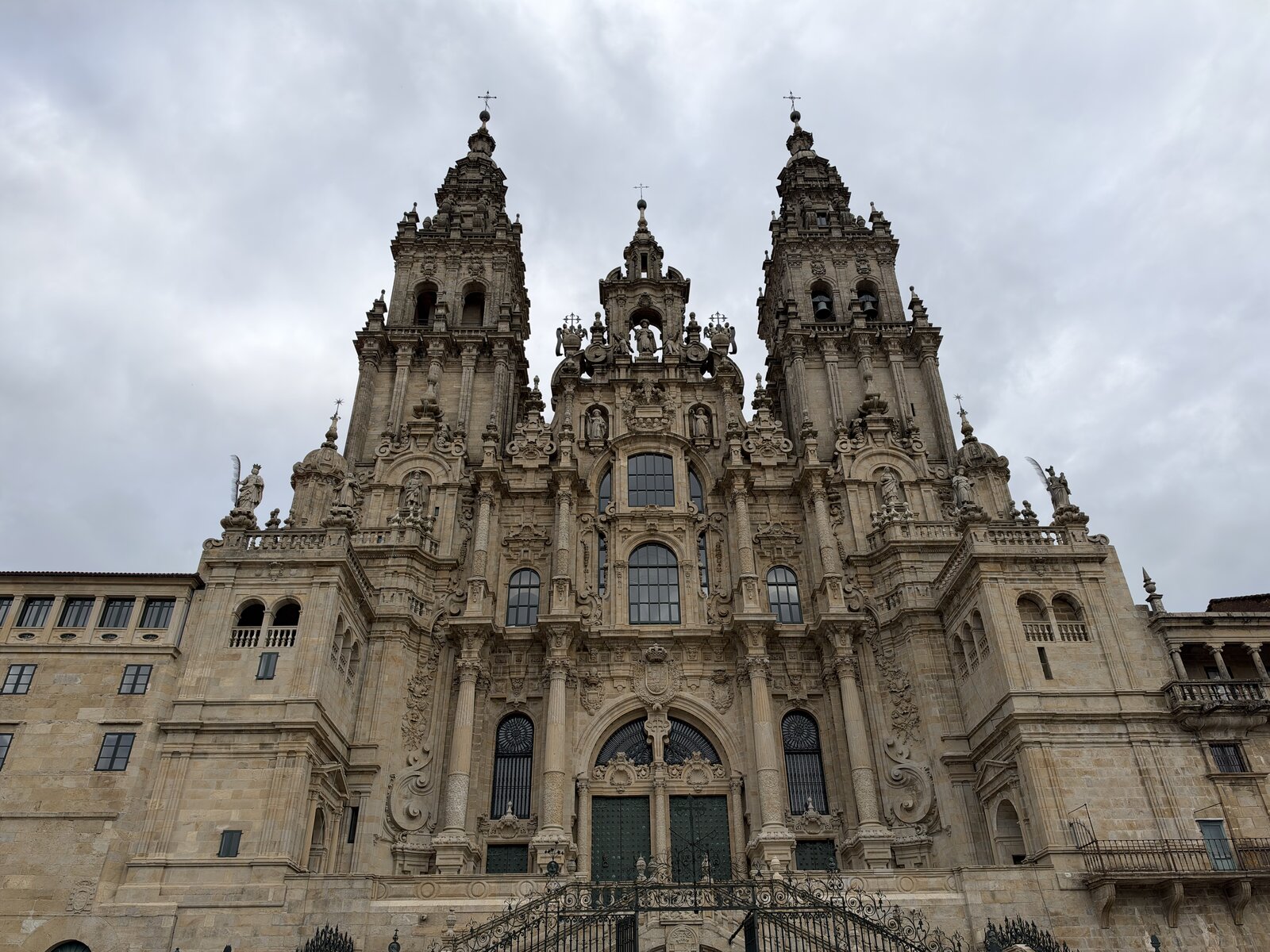
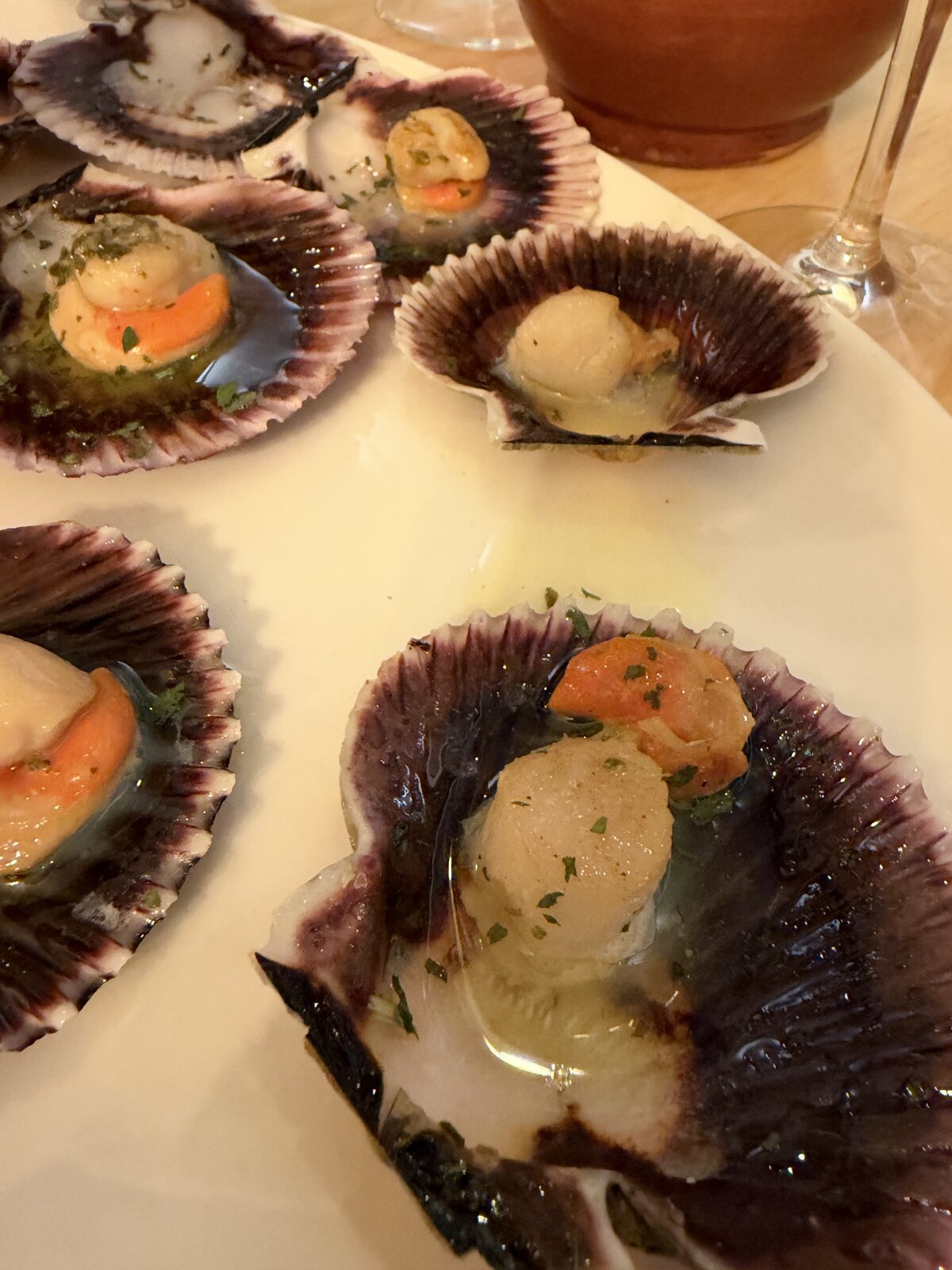
We stayed at the San Francisco Hotel Monumento, a former monastery that still feels like one — stone corridors, high ceilings, the whole thing. We ate a lot of octopus here, plus vieiras — scallops baked in their shells, a Galician staple — and a very good raxo a la plancha, and somewhere in our wandering we stumbled onto a dive bar that felt exactly like the ones we’d been finding all trip, down to the lighting.
The cathedral’s interior is impressive even mid-renovation, though the main altar was obscured by scaffolding while we were there. Nearby, we wandered into the Igrexa de San Domingos de Bonaval, a 13th-century Gothic church that’s been deconsecrated and now serves as the Pantheon of Illustrious Galicians — the resting place of figures like the poet Rosalía de Castro. No sign outside really prepares you for what’s inside. What struck me most, though, wasn’t who was buried there — it was the quiet, a stillness that felt completely different from the cathedral a few blocks away.
What’s stayed with me most from Santiago, though, is standing in the square and watching pilgrims arrive at the end of their Camino. Nobody around them said much. What I actually saw wasn’t tears — it was smiles, big ones: people posing in front of the church with their walking sticks, flipping open their credencial, the pilgrim’s passport stamped at every stop along the way, to show off a few hundred kilometers’ worth of proof. I don’t have the right word for what it felt like to watch. Somewhere between humbling and inspiring, and I never quite landed on which.
Dinner at Casa de Comidas gave us the best menu description of the trip, verbatim, under “Our rice dishes — price for 2 people”: The Young Gentleman’s Rice — Mel Gibson’s (4/8/2019) — slug clams, scallops, squid, prawns, and mussels. I have no further context and didn’t ask for any. Some things are better left as a date and a name on a menu.
Barcelona, again
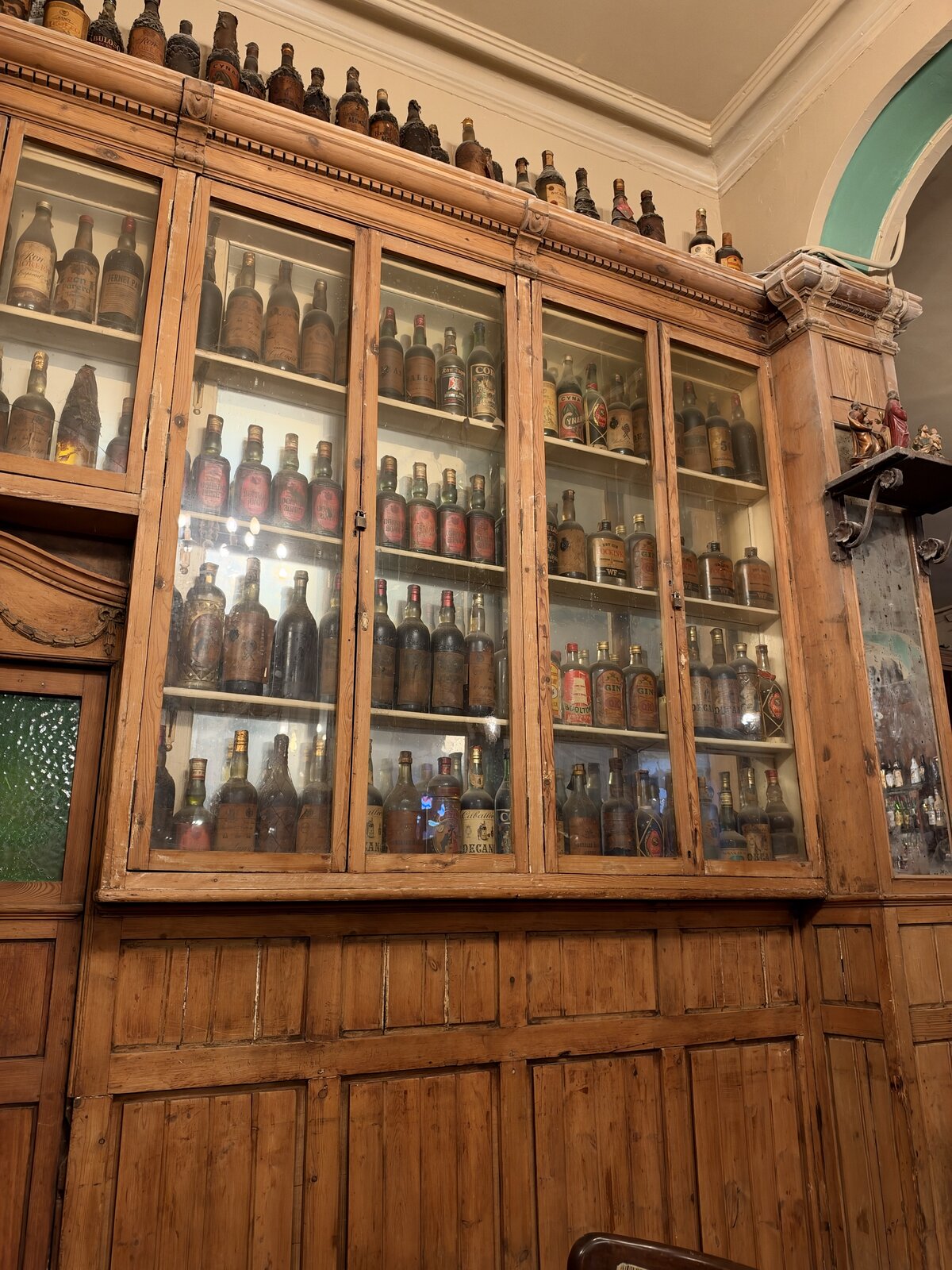
One flight back to Barcelona, one last night before the trip closed. We went back to Bar Del Pla for a second plate of those anchovies, which held up perfectly well on a repeat visit. Bar Marsella gave us a proper absinthe — no theatrics, nothing set on fire. Instead: a sugar cube on a slotted spoon over the glass, and a small bottle with a pinhole poked in the cap to drip water over it, slowly, until the cube was gone and the drink had gone cloudy. Then you stir and drink. All of it under a wall of bottles that looked like it hadn’t been rearranged since the place opened.
CatBar got us through the early evening — one of Barcelona’s original vegan spots, decked out top to bottom in cat-themed everything despite, somewhat misleadingly, not having a single actual cat in the building. And Cal Pep closed out the trip as the best dinner of the whole fifteen days — worth saving for last, even if that wasn’t the plan going in. There’s no menu there and no reservations at the bar: you show up, wait for a stool to open, and tell the person behind the counter how hungry you are and what you do and don’t like. They take it from there. Ours came out as lentils with scallops and what I’m fairly sure was duck foie gras on top, then mussels, then squid, then monkfish, one dish landing just as the last one disappeared.
Looking back on the whole thing, what stays with me isn’t any single meal or view, though there were plenty worth keeping. It’s the people who kept showing up in between: a couple who’d moved from Florida and another who’d moved to Nice, both happy to talk over a glass of Gómez Cruzado; a Dutch couple who’d driven down from home just for the weekend; a museum owner in a town of fifteen hundred people who couldn’t say a word to us in English and didn’t need to. The food and drink ran together into one long, excellent thread the whole way through — anchovies and pan con tomate and jamón wherever we sat down, more octopus and mussels and razor clams the farther west we got, a cortado that somehow never missed no matter how small the town. Even the beer had a different name in every region: a zurito in the Basque Country, a caña almost anywhere else in Spain, a corto in Galicia, a penalti in Aragón — four words for the same small pour, which feels about right for a country this regional. But mostly what I keep coming back to is the smiling. The museum owner’s, demonstrating his gramophone one more time. The couples at the wineries, strangers an hour earlier. The pilgrims in the square, grinning behind their walking sticks, their credenciales held open for whoever was looking. That’s most of what a good trip actually turns out to be.