A few nights ago family in Cedar Rapids sent us a text: her husband was, in her words, “about to do karaoke at red lion 🤣.”
A minute later a video came through: red walls, a string of red lights, a lion painting watching over the room, and him up there with the mic in both hands. The song was “Firecracker,” by Josh Turner — chosen, she reported, for all the low notes it gave him. Someone asked if the Red Lion was their new hangout now. Her answer was three words and a laughing emoji: I guess so.
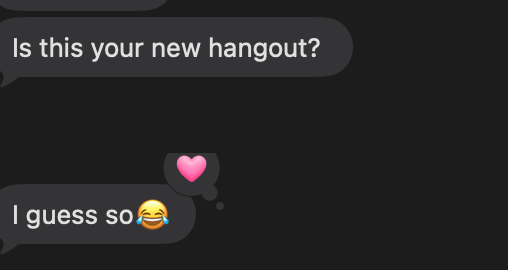
Here’s the part that got me: about a month earlier, we’d all been there together, and it was the first time for any of us.
The Red Lion
I have a weakness for a certain kind of bar. Not the good kind, exactly. The red-lit, low-ceilinged, jukebox-in-the-corner kind, where the drinks are cheap and someone’s always about to sing something they shouldn’t. Given the choice in a new town, that’s the room I’ll steer everyone toward.
So when we were in Cedar Rapids in early summer, visiting family who’d only lived there a few months, I did what I do. I talked us all into the Red Lion — a dive with red lighting and a karaoke setup, and new to every one of us. Exactly my kind of room — which is the word I’ve come to use for these places: four walls and a reason for people to be inside them together. They came along to humor me, I think, the way you humor the relative from out of town who has Opinions about bars. And we had a good night. Good enough that I filed it away as a nice evening and didn’t think much more about it.
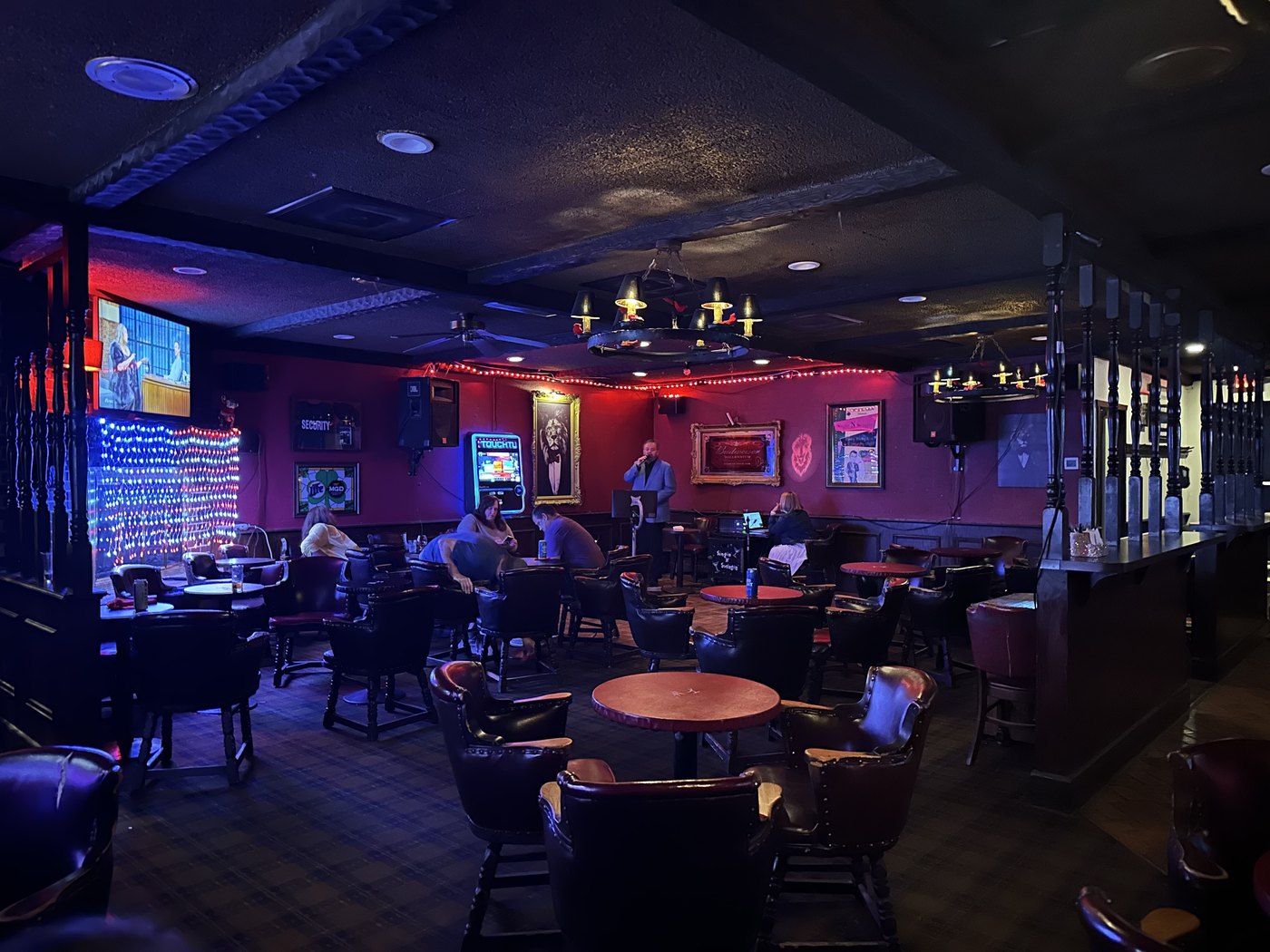
Then, four weeks later, the text. Him at the mic. Her saying I guess so when someone called it their hangout.
We all walked into that place as strangers on the same night. A month later it was theirs.
Bill and Bob’s
I’ve been thinking about that — about how a room grabs hold of people — because when I got home this summer I finally framed something. Two little tokens, red, identical, each stamped GOOD FOR 5¢ IN TRADE — BILL & BOB’S. I put them in a black shadow box and set it on a shelf.
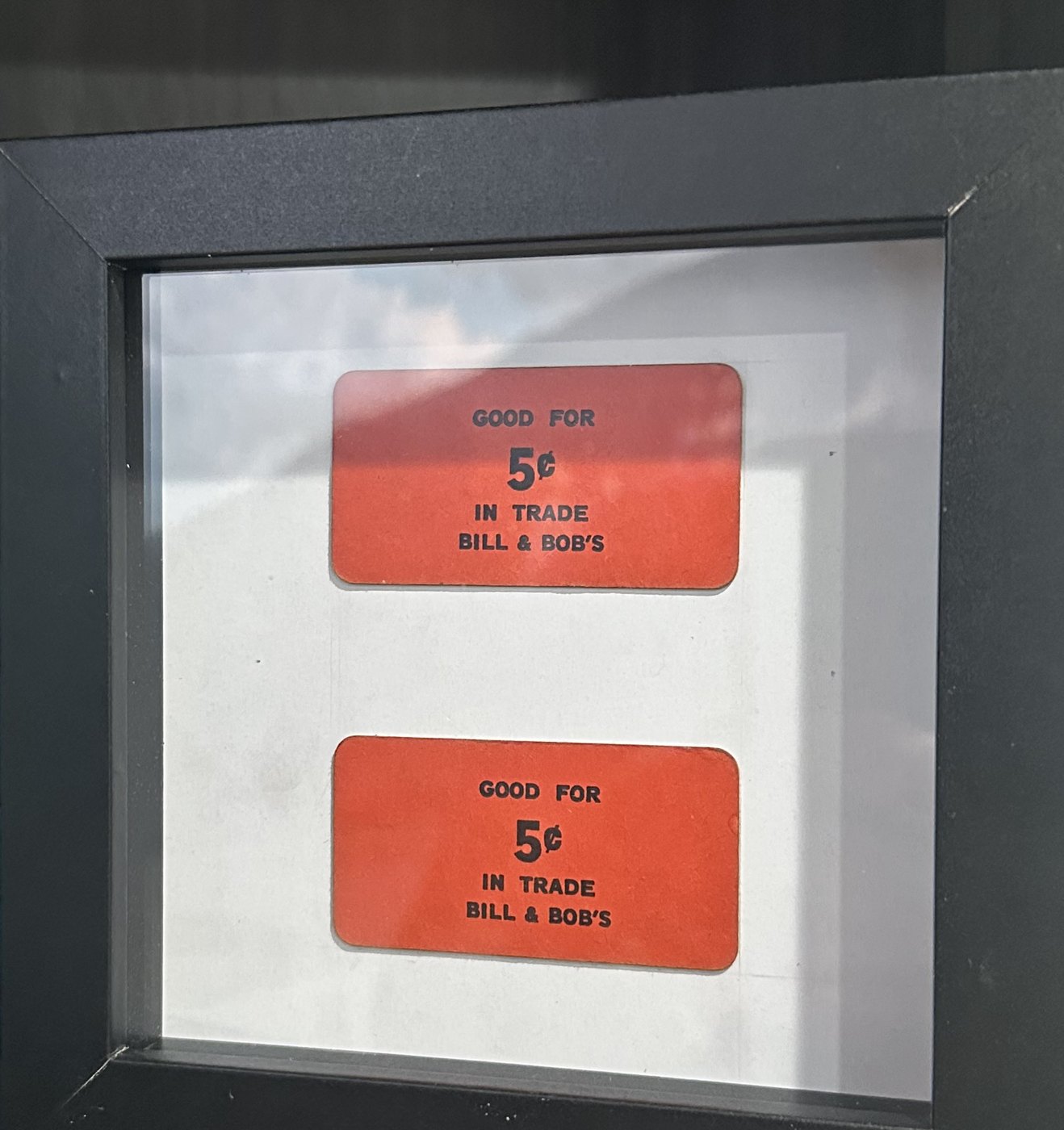
Bill and Bob were Bill and Bob Carteaux. Bob was my grandfather.
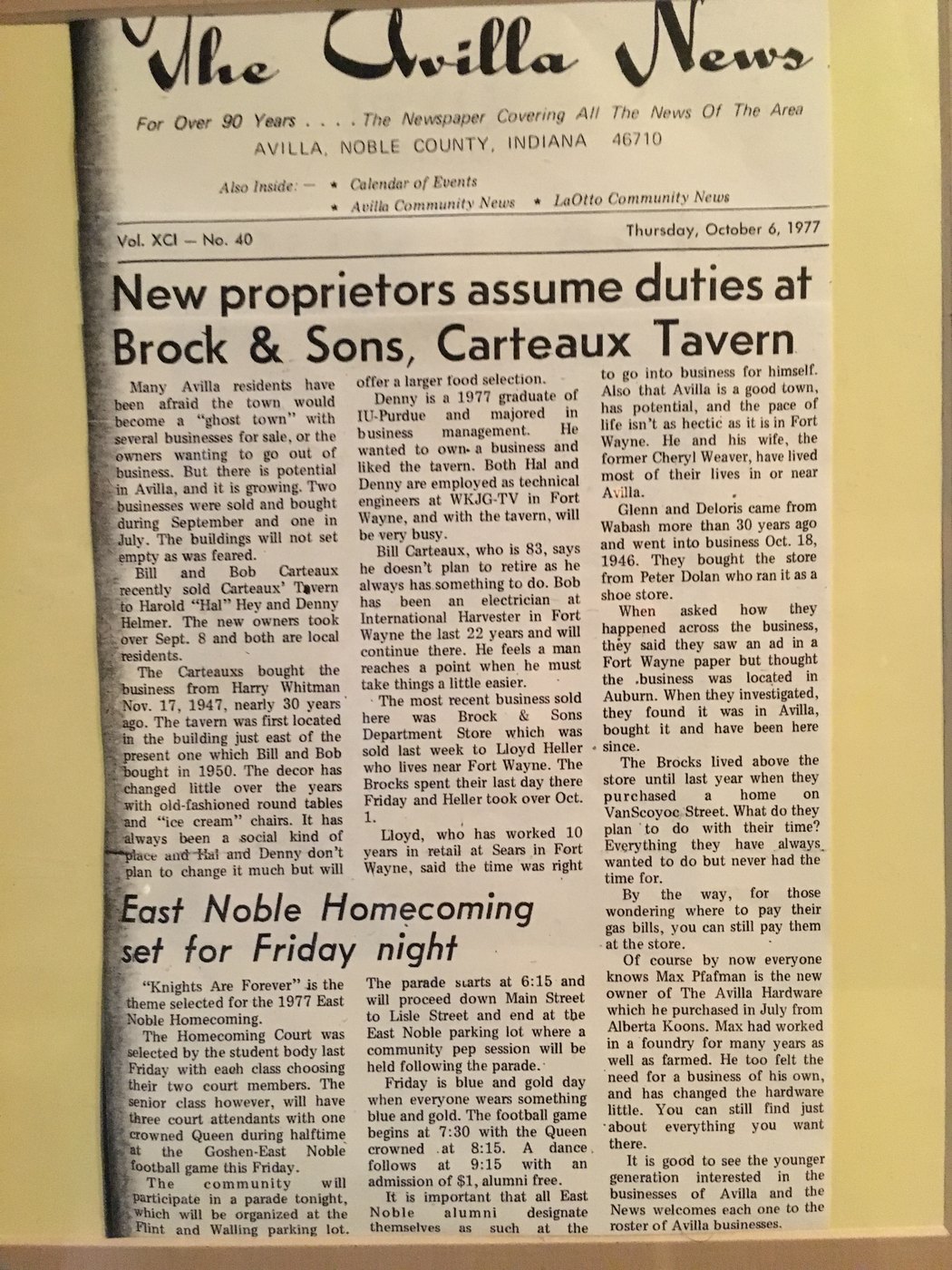
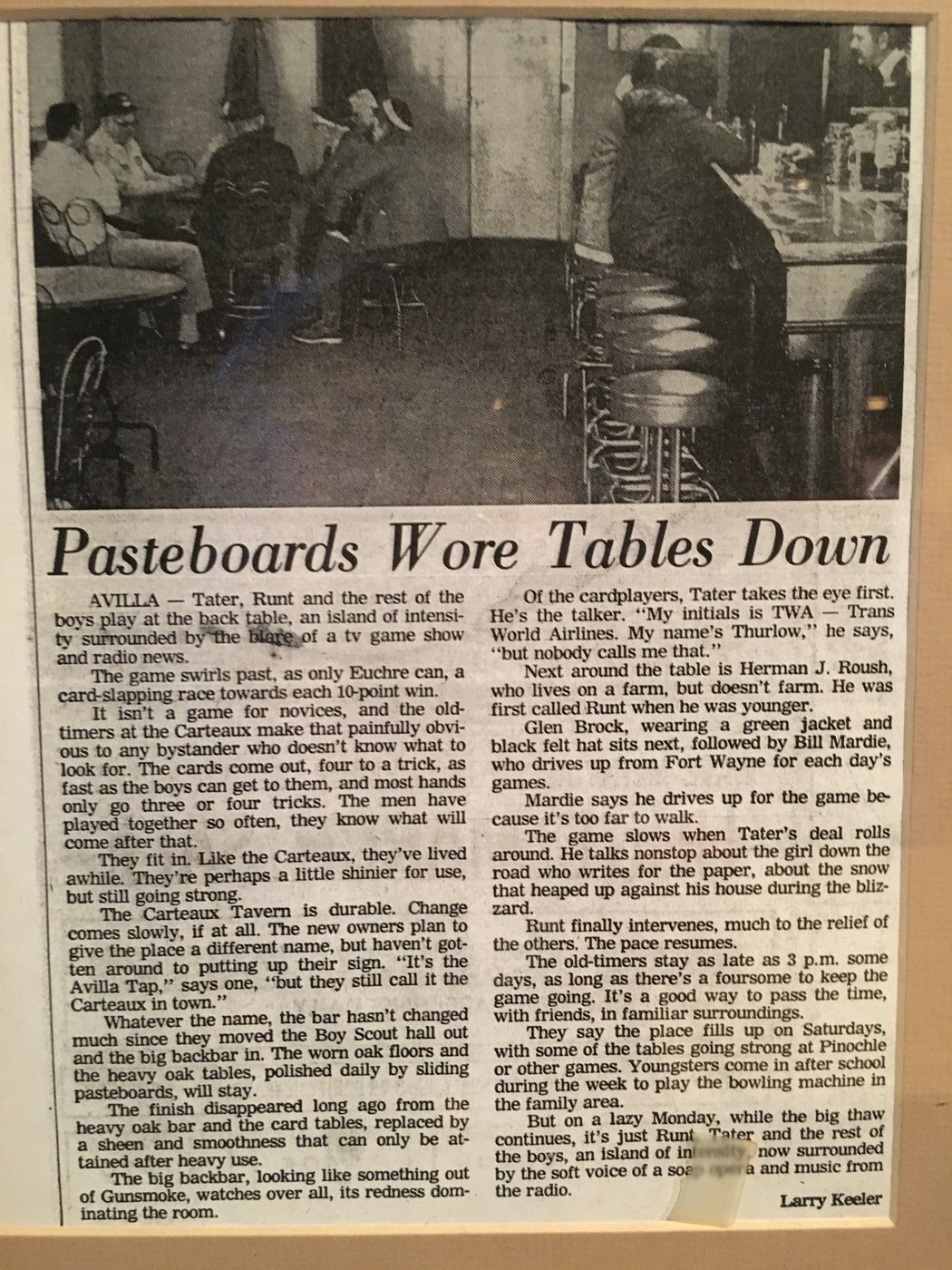
They ran the Carteaux Tavern in Avilla, Indiana — a town of about a thousand people in Noble County, the kind of place whose newspaper has covered the local news for over ninety years. They bought the business in 1947, moved it into its building in 1950, and ran it for thirty years before selling in 1977, five years before I was born, to a man named Hal Hey. It’s still a bar. These days it’s called Hey’s Tap, and the walk-in cooler still hangs on the same wooden door it had when my grandfather owned the place.
Somewhere along the way I went looking online and turned up a matchbook from the tavern. Gold letters on blue. A phone number that was just 91 — not a typo, the whole number, back when a town this size didn’t need more digits than that. And across the top, the tavern’s own slogan:
Where good friends meet.
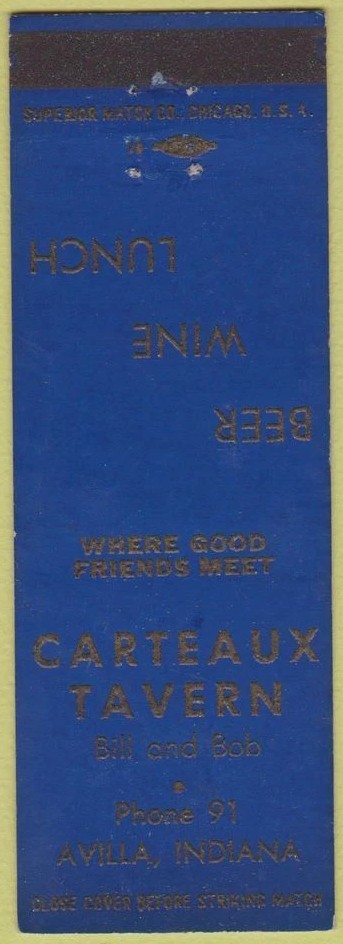
You don’t write that for a business.
I know all this partly because we still go. Whenever I’m home in Indiana we end up at his old place, where two yellowed newspaper articles about the Carteauxs hang on the wall. A bartender there — I’ve met her a handful of times, never once got her name — figured out a while back that my family was the family in those clippings. One Christmas she walked us down to look at the basement. And at some point after that she came across a box of the old five-cent tokens, and instead of tossing them she held onto them, because she’d decided we’d be back for them eventually.
She was right. My mom came through sometime later; the bartender recognized her and handed over the box. This summer, home, my mom counted out a short stack of them — maybe forty — and gave them to me.
So the tokens didn’t come down to me through the family at all. They came down through a stranger who tends my grandfather’s bar, who never met him, and who understood without being told: keep the thing, the people will come back for it.
Grandpa’s little helper
My parents split when I was young. My dad is still around, and we’re close — but a lot of the day-to-day raising fell to my grandparents. My grandmother did the most of it. My grandfather was something a little different: a near-constant, close-at-hand example of what it looked like to be a good man, a good husband, and someone a town was better for having.
By the time I knew him the tavern was long gone; he’d taken a job as the custodian at St. Mary’s, the Catholic school in town — janitor, groundskeeper, boiler-room, keeper-of-the-building, all of it. And I “helped.” I was eight, maybe ten. Helping meant shooting baskets alone in the empty gym, the sound bouncing around, while he did whatever needed doing in the classrooms. It meant tagging along out to the grounds, and down into the boiler room, and mostly just being wherever he was. I wasn’t useful. The nuns called me Grandpa’s Little Helper anyway, and everyone understood the arrangement for what it was, which was that he liked to have me around and brought me along so he could.
That was how he loved people. Not with instruction. With proximity. Come along. Be around. Here’s the room, and you’re welcome in it. And he built a lot of rooms. The tavern, first, with its slogan right there on the matchbook. Then the school he kept warm and running. He was commander of the Avilla American Legion post three separate times, and stayed active with the VA for as long as he was able — a man who kept finding places for people to belong and then showing up to hold them open.
He was a euchre man to the end, too, and he’s the one who taught me — the kind who could sit at the same table for a whole afternoon. In a town that small the game was never really about the cards. It was about who was across the table. One more set of good friends, one more excuse to keep them close.
He died in February of 2006. I was twenty-three.
The hometown hero
We were back in Avilla this summer, and the town has a thing it does — banners on the utility poles along the main drag, one veteran to a pole, blue and red with stars across the top. Hometown Heroes.
One of them is my grandfather.
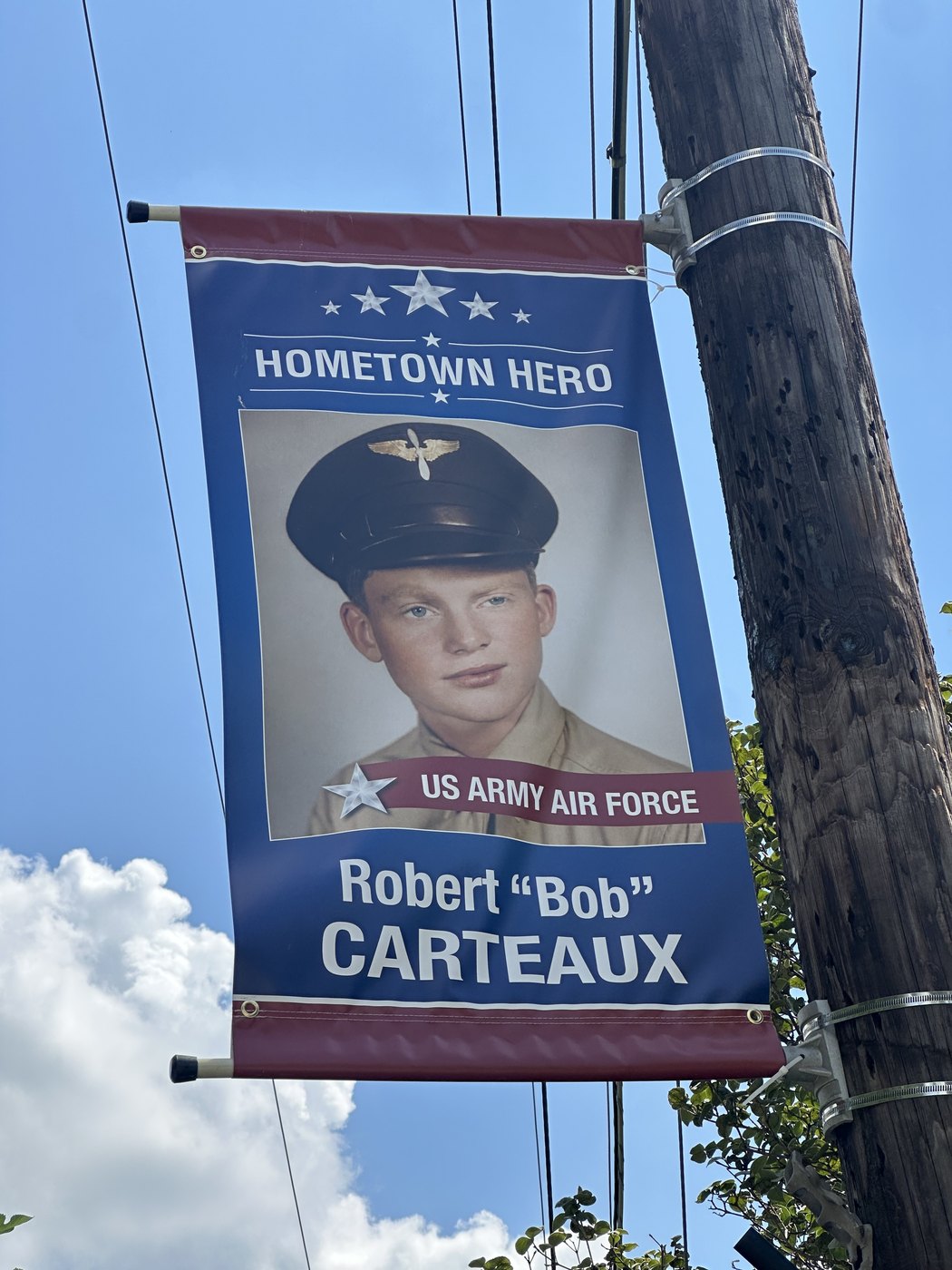
Robert “Bob” Carteaux, the banner reads — US Army Air Force, the singular everyone used back then, though the branch was really the Army Air Forces, the wartime thing that became the Air Force a couple of years later. The photo is one I’ve known a long time: a kid in a service cap with the winged insignia, tan uniform, looking straight ahead with an expression that’s half boy and half already-serious. The family story is that he lied about his age and got in at seventeen, and looking at that face you believe it. He doesn’t look old enough to enlist. Or to run a bar, or push a broom at St. Mary’s, or teach a grandson euchre — all of which he’d go on to do.
We pulled over to the side of the road and I sat there looking up at him for a while. The town that watched him keep its rooms his whole life had made one for him, up on a pole where everyone passing through drives underneath.
I knew the man at the end of that photo. The town hung the beginning of him.
The family business
I didn’t inherit the tavern. It was sold for reasons that made sense at the time, and it belongs to someone else now.
What I got instead, it turns out, was the reflex.
I noticed it lately, holding those two nickel tokens. That same stretch of days had a backyard whiskey night under the string lights, a drive out for sausage and a wine tasting, karaoke on a Friday. There’s almost always a bar in the mix somewhere. I keep building rooms for people to gather in — a backyard, a table, a Friday night — I just don’t have a building or a phone number 91. I run the same business he did. I’ve simply got no real estate.
And every so often a room takes hold of someone. You talk everyone into a red-lit dive none of you have ever seen, on a night that’s just supposed to be a nice evening, and a month later it’s their hangout, and the husband’s up at the mic doing Josh Turner for the low notes, and his wife is texting you a video because somewhere in the back of her mind she knows whose fault this is.
I think my grandfather would have recognized the whole scene instantly. The red room. The bad wonderful song. The friends who wandered in once and never quite left. He spent his life making exactly that, and putting four words on a matchbook to explain it.
Where good friends meet. Turns out it’s the family business, and I’m still in it. I just had to frame two five-cent beer tokens to notice.